Thursday, August 28, 2008

The Art of the Character Actor


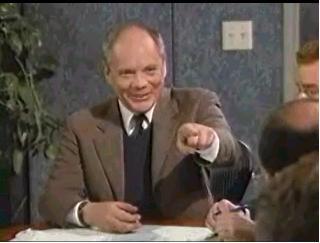
So I'm watching Broken Arrow on one of many great HD channels that Dish Network provides (hey, it's my last week of vacation still...cut me some slack) and I was glad to see two of my favorite character actors sharing some dialogue with each other. Who might those actors be? No, it's not Howie Long and Delroy Lindo. It's Kurtwood Smith and Daniel von Bargen. Now you may be asking yourselves who these people are. You probably know both of them from their television work -- Smith as the dad on That 70's Show, and von Bargen as Kruger, George's boss, on some of the later seasons of Seinfeld -- but it is their work in movies a watched a ton when I was younger that makes me laugh whenever I see them in a movie I happen upon while watching television. Smith was the villain Boddinger in the brilliant Robocop and he was in Rambo III. Von Borgen was in one of my favorite horror movies back when I was in high school called Lord of Illusions which also starred Scott Bakula (!) as a private detective trying to track down an evil warlock or something or other...whatever it was, it was being played by von Borgen and I always remember that performance. These two truly are the epitome of character actors. One glance at their filmography on imdb and you see that these guys act in anything and everything. They obviously never have trouble finding work; which is good for me because that means I will see them randomly on television in some movie or making an appearance on a sitcom. Anyway, I'm bored and I saw those two actors and felt like I should make you all aware of their brilliance.

Oh...and whatever happened to Christian Slater?

Saturday, August 23, 2008

"There is no film. There is nothing, nowhere."


This is part of the Movies About Movies Blog-a-thon hosted by goatdogblog. You can read the rest of the entries here. There's some really good stuff there, check it out.

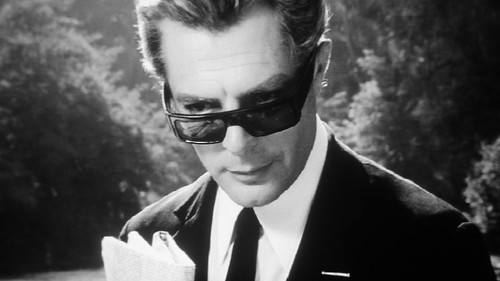
The words in the header are uttered by Guido (Marcello Mastroianni), the director of a movie in a movie by Federico Fellini, and they set the audience up for the films main theme: that through the darkness and uncertainty of not knowing what's to come, we can look to our memories and it is this nostalgia that can lift us up and break free the chains of reality we are immersed in everyday. For Guido there is "nothing, nowhere" at the particular time he speaks these words, but as the film progresses we see a man change; dwelling on past childhood memories, rites of passage, male fantasies, and the value of life itself, Guido doesn't just represent the obvious self-reflexivity of filmmaker Federico Fellini, but also the audience. Fellini is inviting us to partake in this explication of past memories like Guido does, and if we the audience give ourselves to genuine contemplative moments, then we too can change and that there is life to be lived. Something, everywhere. 8 1/2 is that rare film that is a masterful film about a film, but it has the ability to penetrate the screen and creep into our psyches and affect us like no other film can; but like all film hopes to do. That is the power of film, and the power of 8 1/2.


8 1/2 was the moment when director Federico Fellini was starting to hear the jeers from the ultra-serious Italian neo-realist crowd. Having his roots in neo-realism Fellini made a stark departure from the grounded realism and Truth many Italians and film critics found in films like The Bicycle Thief and the Fellini penned Rome, Open City. When Fellini broke free from the shackles and limitations of neo-realism (emotionally it's a great movement and there are some great films there, but it's pretty aesthetically dull) with his brilliant La Dolce Vita all bets were off. Then came 8 1/2 and most critics and lovers of neo-realism thought Fellini had completely lost his mind.

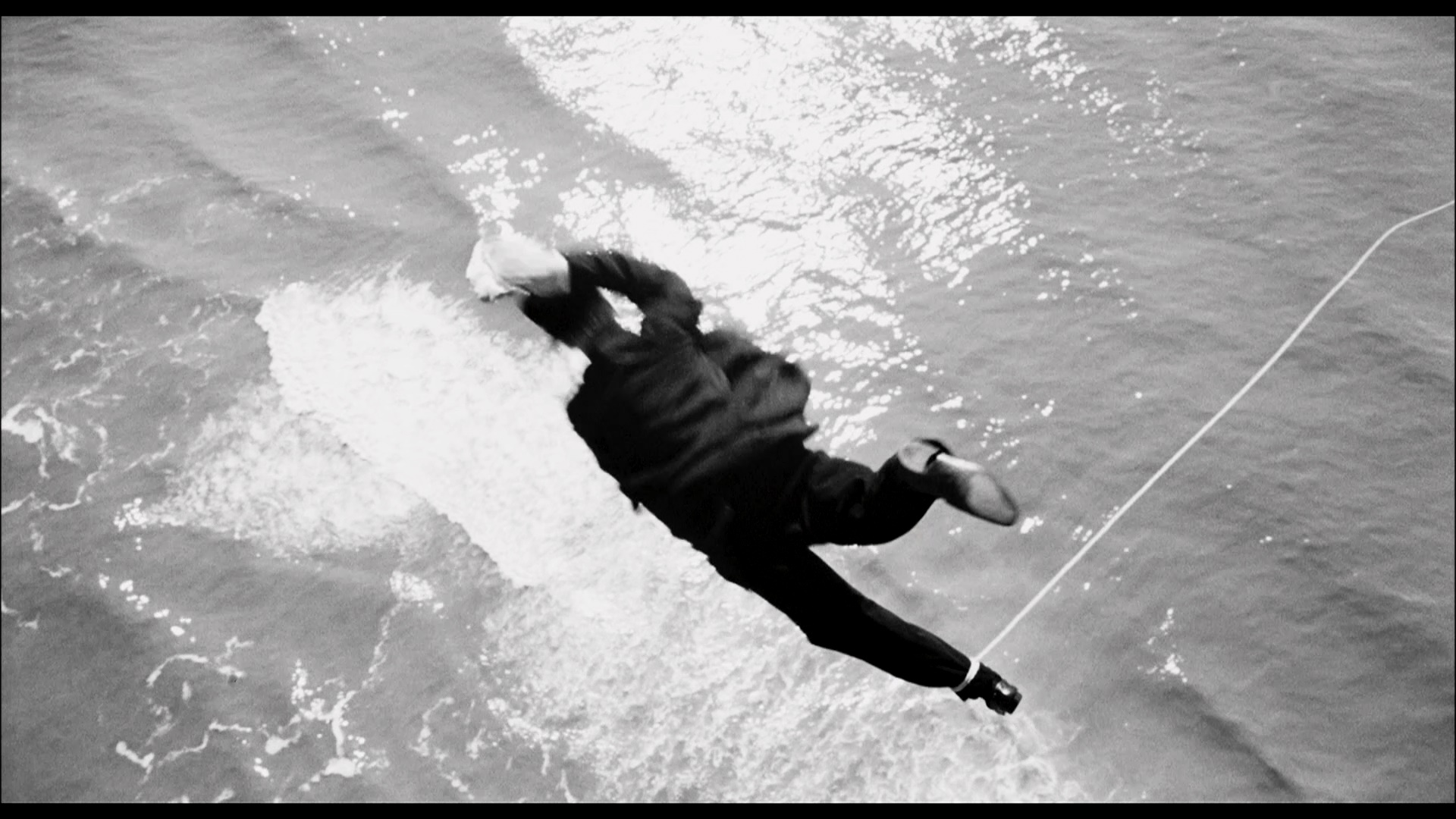
The film shows Fellini's own frustration with the film industry as is masterfully displayed in the famous opening dream sequence. Right away Fellini is telling the viewer that this is a self-reflexive film. We are introduced to Guido while he is being asphyxiated by some kind of gas and trying to kick out the windows of his car, when he suddenly appears outside floating above his car. Guido then floats through his world and eventually above a beach (which we are given the information for later in the film) only to be pulled down by one of his associates (a producer, no doubt representing reality and the decisions Guido must make) who have a string tied around his leg. As Guido struggles to break free from the rope the producer tugs harder and Guido falls, then he wakes up.

The effect of this opening sequence is twofold: from a strictly aesthetic standpoint it's some of the best visual work (all the dream sequences are filmed beautifully, they are also the most fantastical moments of the film) Fellini ever did, showing that he was done with the neo-realist approach to filmmaking. The other effect the opening scene has is the self-reflexive nature of the scene. Since Guido is Fellini it can safely be interpreted that this must have been how Fellini felt while not only making 8 1/2, but any movie after the extremely popular La Dolce Vita. Fellini is telling us that the life of filmmaker working with all these movie producers and people employed by the studios is the same as the opening scene. The obscurity vs. clarity polarity is obviously there with the asphyxiation scene (studios wanting something creative from you even if you have nothing to offer them, another theme of the film), but also the fact that Guido is able to soar in his dream just a little bit, but when he flies by his set (notice how it's for a science fiction film) towards the producers on the beach, they want him down; who surely believe that you can only allow a creative force (like Fellini) so much time in the day to dream things up. A frustration that pulsates throughout the film as the need for decisions and deadlines weigh heavy upon Guido the only thing he can do is think about his childhood while everything around him in the present (the film, relationships) crumble.

The other scene I want to talk about is the origin of the moment where Guido probably decided he wanted to make movies. There is a flashback to Guido's childhood triggered by the password "Asa Nisi Masa" which Fellini explains in an interview is a game him and his friends used to play where they would add the suffix -si or -sa to the first letter of something they wanted to turn into a coded word. In the film one of Guido's friends tells him a story that if they don't utter those words at night before they sleep a picture on the wall will come to life. The correlation of making pictures move and making movies is brilliant and one of the best scenes of the film. If you break down the word further like Fellini explains it then you find a kind of password like Welles' "Rosebud". "Asa Nisi Masa" becomes anima meaning soul or force, but also some of the repressed female characteristics that can be found in men. This is portrayed in the brilliantly wild and funny Harem scene where Guido has all of the women from his life waiting on him hand and foot. It's as if he has them bottled up in his psyche, they are a major part of who he is.

The film excels on the deep interpretive level, no doubt, but it is also just a joy to savor all of its beautifully imagery and the amazing musical score by Nino Rota. It's a film that can lift your spirits by the sheer brilliance of which it was made, yes there are a lot of underlying themes, but more than anything its a film about filmmaking that excels in everything a film should be; which is important since everything we're watching is about what we're watching. The art of the film about a film is often lost on many filmmakers today who are too interested in the easy satire or in-jokes (Fellini was funny too, he kept a sign on the camera throughout 8 1/2 that read: "remember this is a comedy.") of Hollywood, but with 8 1/2 Fellini is interested in something much deeper.

No other film about filmmaking has as much depth as 8 1/2. Here is a man who is seeking all kind of cure methods while he's ruining relationships, meandering on the set and delaying the film (the scene where he is being forced to talk about what the movie is about is hilarious), a man who would rather contemplate on the past then do anything about the future of his film. And this is the point of the film and what makes it the best film about filmmaking. When Fellini was asked what he wanted with 8 1/2 he said he wanted to depict the "three levels upon which our minds live: past, present, and conditional." As a film professor I had once pointed out, notice how Fellini isnot the future, but instead the possible, the potential, the fantasy (think about the end of La Dolce Vita, it's not what his life will be like if he leaves the beach with his dream girl, it's all about the potential, the could of the situation is deafened by the breakers that drown out her voice).

Fellini's major films are more surreal, expressionist, postmodern. Some fault him for this, calling it willfully exhibitionist and aesthete. So the quote I threw in the title of this post makes the film sound nihilistic and teeming with the postmodern nonchalantness and irresponsibility that many of Fellini's detractors accuse him of. That is often the mistake with postmodern art, be it film or literature or whatever, the knock on it is that postmodern art is too nihilistic and doesn't care about the future. This assessment couldn't be more wrong, because the people who do postmodern art correctly understand what it truly represents: that through an explication of our past we can change how we are in the here and now. The future is always in question with postmodern art, much like it is with Guido and his film. He can't answer questions about the future of his film because he doesn't know what the future holds. Why let the future rule your life when you don't even have control of what's happening in the present? And this is what's at the heart of 8 1/2 and postmodern film and literature: how can we change the now to a better now. Yes, the film is exhibitionist (as is evident in the wonderful screen test scene where the theater acts as a confessional), but it's never exclusive; the invitation is there for us to be contemplate on life like Guido in the movie theater watching screen tests.

The above quote in the header suggests that there is something beyond the screen that is more important. 8 1/2 is a perfect example of how a film can use its techniques and moments within its story to evoke past memories -- nostalgia that makes us feel good about the present, the here and now. By exploring our past histories we can uncover newfound truths about ourselves we never knew; opening up parts of our anima, our soul or driving force, we never thought were possible. And isn't that the most wonderful and ultimate goal for all film, to move us and provide us with those moments of reflection?

As mentioned earlier 8 1/2 is the greatest film about filmmaking ever made; I also find it to be the greatest film ever made. It resonates with me the more I watch it. It's one of those rare films that excels at both being about as aesthetically perfect as a film can be and having a powerful and poignant narrative that never grows tiresome. This is the power of the film: like a good epistle or contemplative prayer by the great Thomas Merton, I can return to 8 1/2 numerous times because both its aesthetics and its narrative put me in a deep state of the contemplative. And isn't that the goal of most films? To resonate with us so deeply and on such a personal level that it becomes almost a religious text for us; opening up new worlds of personal discovery and epiphanies that help us learn from our past so that we can become better people today.

8 1/2 contains the power of a film that is, on the surface, a self-reflexive exercise by Fellini who threw everything on the screen for this movie, even having some fun with film criticism as the critic in the movie is the catalyst for the death of the film; but beneath its surface lies an invitation for the audience to think about our own pasts, think about how we treat the ones we love, and how to be an original thinker in a world that wants you tied to a string so at any given moment they can pull you down from your moment of reverie. It was about five years ago that I accepted this invitation when I sat down and watched 8 1/2 for the first time. Watch it by yourselves first, then watch it with friends -- freeze framing certain scenes and discussing the power that lies in each frame; this is a film of tremendous power and poignancy, a film filled with beautifully lighting and cinematography, a film that has some pretty funny satirical comments on the movie making business, and more than anything it's just an entertaining, wonderful film experience, unlike anything you have likely seen or will ever see after. It's the greatest film about filmmaking, yes, but it's also the greatest film of all time.

Monday, August 11, 2008

Pineapple Express


David Gordon Green is one of the best filmmakers working today who some have even compared to the visual poet and master Terrence Malick. Would you have ever guessed that him and his friends that met at North Carolina Film School (his DP Tim Orr and the actor Danny McBride) wold collaborate with the Judd Apatow and Seth Rogen on a pot comedy? Yeah, it's a little surreal, but when I saw the red-band trailer for this movie months ago, I knew that these two camps couldn't miss if they were to collaborate. Pineapple Express is a perfect example of a visual poet adding his touches to a commercial Judd Apatow produced "bro-romance" . It's a film filled with surprises and the usual pot-fueled comedy routines, but it is all done with such visual beauty, a fresh take on things like car chases and people sitting around smoking pot, and it all ends with a subtle joke that seems to have been missed by many.


STOP READING IF YOU DON'T WANT THE LAST 30 MINUTES OF THE MOVIE RUINED FOR YOU. I CAN'T REALLY TALK ABOUT THE MOVIE WITHOUT DISCUSSING THOSE LAST MOMENTS.

Jim Emerson on his scanners blog hit the nail right on the head with his analysis of the film. Check it out after you see the movie.  The reason I bring it up is because I am surprised by how many critics missed the joke of the film. The film itself is about as simple as you can get, and that's mainly because the joke of the movie is that this is exactly the type of movie that these two stoners would conjure up on their stained couches.

The story is about Dale Denton (Rogen) a process server who witnesses a murder. He leaves a joint behind and that's how Ted (the always brilliant Gary Cole) can trace the weed back to Dale's supplier Saul Silver who is the only person who has the particular type of weed that Dale was smoking (called pineapple express). This all leads to a horribly convoluted buddy chase movie in the vein of 70's movies like What's Up Doc? or anything by Cheech and Chong. But really the fact the story is so convoluted is irrelevant, because well, that's point. When the film stops being a pot movie and turns into a full blown action film from the 80's -- that's your sign to stop taking the film at face value.

Now it's not irreverent or obviously winking at the camera like the old Abrahms and Zucker Brothers movies, but if you understand what is being done in the final moments of the film, it makes the movie so much more enjoyable. Sitting there in the theater I couldn't stop laughing as Green and Apatow (and screenwriter Rogen) riffed on the conventional car chase ("just kick it with your foot, isn't that what they do in the movies?" "But how do you drive with only one foot?") or other exchanges like the morning after the big final showdown with all the drug dealers. They sit around eating a greasy breakfast and discussing how awesome everything was and who did what and how great it was when they did this...and you get the point.

Let's talk about that ending: for me it was one of the greatest things I have seen in a comedy in a long time. Better than the Michael Bay-parodied Hot Fuzz, the end of Pineapple Express is an olio of ever 1980's and early 90's action film I grew up watching. In this final scene, which takes place in an abandon barn complete with multiple levels and secret doors, I was reminded of the first two Lethal Weapon films (someone gets shot as they stand on a metal grate and then fall over and get their leg caught in a chain and swing from side to side, but sadly James Franco doesn't tell anyone to "go spit"), Double Impact or any Jean-Claude Van Damme movie for that matter (Seth Rogen and Gary Cole have an incredibly long fight scene plus there are barrels! If you've seen those movies, you know what I mean), any thing made by John Woo, I saw some Predator, some Commando, anything with Segal or Chuck Norris, any straight to video movie with ninjas or Billy Blanks, and I could go on...


The point is that these are all references that Rogen and Apatow and Green wanted to install into their film because this is how they think these two characters Dale and Saul would expereicne something like this. There is no reveal at the end of the movie that lets you know it was all a hazy brainstorm while they sat on the couch and smoked Saul's innovative "cross doobie" or that they were just dreaming this thing up all along in some passed out reverie. That's what makes the joke so great, because there is no way that one can watch this film with a straight face. I was surprised to hear Michael Philips and Richard Roeper the other night talking about how they were disappointed in the film and how ugly and violent it was at the end, and how it didn't match the tone. I was surprised they missed the joke, especially Roeper seeing how later in the show he recommended the brutally violent and gratuitous Hell Ride. I think they wanted the film to be something it was never intended to be, and Philips got it right when he said that the filmmakers are not at all interested in the commercial appeal of the film. It's all an in-joke, and I for one found it hilarious.

It's almost impossible to conventionally review this film (which I am not trying to do), but it all works if you find the references funny. It also works if you just like stoner comedies; the character of Red (Danny McBride) is bound to get some laughs, as well as Gary Cole asking "has anyone seen my big knife" as he holds a giant machete. But the finest joke is the fact that David Gordon Green directed this film, and the way he has cinematogrpaher Tim Orr shoots the final action scene (he shoots it in a style that is a straight throwback to 80's action movies, everything from the two main characters splitting up so they can have their own final showdowns with the villains they match up with, to the scene where someone rolls on the ground shooting a bunch of people and said shot people keep shooting their guns in the air.) is one of the best jokes in movies this summer, and one of the best comedies that Apatow and Rogen have collaborated on.

Oh yeah, and James Franco steals the movie...every scene belongs to him.

In Bruges


Man I love being surprised by movies.  Sometimes a movie just looks terrible, but then enough people start discussing how good the film is, and well, it's only a matter of time before you break down and watch the movie.  This is the case with In Bruges, a film that was marketed horribly with its awful trailers making the film look like just another Pulp Fiction wannabe (is that even possible 10+ years later?) -- Things to in Denver When You're Dead and 2 Days in the Valley sprang to mind when I saw the trailer, and if you remember those films, then you can see why I was less than enthusiastic about giving the film a shot.  Boy was I wrong.  In Bruges is a great film full of surprises; a film that is one of those rare experiences where you feel as if you don't know what's going to happen next.  It's vulgar and violent, beautifully juxtaposed by the main character of the film, the city of Bruges, with its historic architecture and beautiful art galleries.  It's a near brilliant film with a few odd detours that derail the films momentum, but it is brilliant if not for the sole reason that I was surprised how good the film was.


The film written and directed by the playwright Martin McDonagh (his first feature) is not so much quirky as it is distinct; a unique blend of vulgarity and contemplative moments about heaven and hell.  It stars Colin Farrell and the always great Brendan Gleeson as two hit men who are told to take two weeks off in the historic Belgium city Bruges.  The reason for the sabbatical is because of Ray (Farrell), who was asked to kill a priest, but when he shot the priest he accidentally shot a little kid praying (sounds implausible, but the way McDonagh sets you up for this scene is masterful).  This bit of collateral damage is made all the sadder when Ray sees a small piece of paper that has what the kid was praying about -- this moment is rare in that it evokes both poignancy and laughter, something that McDonagh and especially his actors pull off extremely well throughout out the film.

While in Bruges the characters are established.  You have Ray the young and brash hitman, suffering from his mistake on his last hit, and bored to tears in Bruges, where all he wants to do is drink and hang around a film set that has set up shop in the city.  Ken (Gleeson) is the veteran who is interested in getting Ray to put the incident of the kid behind him and focus more on sight-seeing and what the historic city has to offer.  One of the best scenes between these two in the city is when they are in an art gallery.  The images of the art contrasted with the face of Farrell (who has great facial expressions throughout) are wonderful and are a perfect example of the uniqueness of the film.


While in Bruges things happen (odd things involving racist dwarves and crazy canadians) that are hit and miss, but the heart of the story is what happens between Ken and Ray and how Ken so badly wants to help Ray get over his mistake and move on.  There is a scene of tremendous, surprising power on a park bench when Ray is trying to talk to Ken about what happened that day.  It's a great scene and shows that when Farrell is comfortable (usually when he can just be himself and talk in his native tongue) he can be a great actor.   I wouldn't dare reveal how the film unfolds (which is half the fun of the movie) but things happen and information is gathered, all resulting in the appearance of Ralph Fiennes as Harry who is their boss.  Fiennes is wonderful, having a lot of fun overacting and doing his best Ben Kingsley impersonation (I'm thinking of the Sexy Beast Kingsley, not the Gandhi Kingsley).  All of this culminates in a final 30 minutes that is just absolutely brilliant with visual nods to films like Touch of Evil and The Third Man and some truly inspired dialogue (especially how the dialogue reveals these three hitmen as having ethics and how they adhere to these ethics).

In Bruges is a film for anyone despite the way the trailer advertises it; it's a film for anyone who loves movies.  As mentioned earlier the movie does get sidetracked with a drug induced conversation between Ken and Ray, a movie star dwarf, and some hookers.  This scene tries a little too hard I think to be "edgy" or whatever, and it just falls flat.  It just doesn't belong in this movie, there was really no need for it considering the first half of the film was vulgar and un-PC enough.  However, it's a rare kind of film that Roger Ebert described as good a debut as Mamet's House of Games, and I think that's a good comparison.  With it's vulgar dialogue, sudden bursts of bloody (McDonaugh likes to use the color red) violence, it's beautiful on location cinematography, and its wonderful acting it's one of the better and most surprising movies of 2008.

Monday, July 21, 2008

Kevin's Favorite 25 Movies, #1: 8 1/2


click here to watch video

1) 8 1/2
1963
dir. by Federico Fellini
imdb

In the interest of keeping this somewhat short and not overly analytical, I am going to use the bullet format to showcase some of the famous imagery and moments that make this my favorite film of all time: the masterful, beautiful, poignant, elegiac, sexy, and highly influential and innovative 8 1/2 by Federico Fellini. Fellini said that when he made 8 1/2 he wanted to create a film that showed the three levels upon which our minds live: past, present, and conditional. There isn't another film that I have seen that is both so pleasing and wonderful to look and still has the ability to move me every time I watch it. Most films will always have the aesthetics down, but the power of the film erodes after each viewing (think a film like The Bicycle Thief). Not so with 8 1/2, I still get a little choked up at the "audition" scene where all of Guido's sins are being displayed in the form of screen tests...but more on that later...here are the bullets, in a somewhat orderly matter:


Opening Sequence/Traffic Jam: An almost ethereal experience as some form of gas fills up Guido's (the main character played by the awesome Marcello Mastroianni) car and he can't seem to escape. The film is definitely an exercise in self-reflexive art. Guido is indeed Fellini (Marcello often represented forms of Fellini in all of his films) and in this opening sequence you can see Guido being suffocated. But then he appears out of the car and floats away...only to be pulled down ("down, for good.") by a man who is in control of the string attached to his leg. The metaphor is clear: the camera is the creative force, the liberator, and you have the producer, the money-man, pulling the director down from his heights to dwell in reality -- or rather what people will pay money to see. This is the dilemma for Guido (and Fellini who often said he "winged" it on the set of 8 1/2) as he cannot think of a way to get his film (read: life) started and on track. Guido is like any good Italian man...he loves women, and when he invites Clara the mistress to come to the shoot instead of his wife Luisa, that's when things get even murkier and more confused for the cheating Guido. And simply: it's one of the most amazing sequences I have seen in any film. The crazy and frantic opening shots, the compartmentalized imagery of arms hanging from a bus and quick shots of faces. There is such a weird feeling to the opening, and so much to see and admirer, that you may have to stop the film after the dream sequence is over, and start over again.

The Thermal Spa
: What's great about this scene is the use of music that accompanies the great tracking shot. It's one of the first films to use an already-composed piece of music as the guide track for the scene. Also, this introduces the always beautiful Claudia Cardinale as the woman of the spring, the muse Guido seeks all film. It's an amazing one-take tracking shot.

Framing/Blocking/Lighting/General Symbolism through mise-en-scene
: Throughout the film there are brilliant examples of mise-en-scene especially in the hotel sequence where Guido wanders the halls keeping watch on all of his production assistants working, but he has nothing creative to add to the process. Also, the scene where young Guido encounters Saraghina and the punishment from the priest that follows (and the tracking shot of young Guido and the portraits of all the priests on the wall) as he confesses, but decides to return the seductress Saraghina rejecting the sacred for the profane. Later in the film there is a masterful use of lighting as Guido sits in a car with his muse; she fully lighted, Guido dark except around the eyes, as if in a confessional booth. The moment is brilliantly executed. There are too many examples to share about blocking and lighting and so on...so I will just say, the entire film is a feast for the eyes. Visually, there is nothing boring about this film

The Women: Fellini always employed beautiful women to star in his films, and even though most of them are regulated to being ogled at; Luisa is one of the strongest female characters in a Fellini film. Played by the gorgeous Anouk Aimee, she isn't fooled once by Guido and his cheatin' ways. Her scene with Guido after the embarrassment of the screen tests is so sad and so telling of how Guido (Fellini) treats the woman he is supposed to love and be faithful to. The famous Harem sequence is also a hilariously overblown wet dream for Fellini, as all of the women in Guido's life come together to serve him, and when they are revealed to be too old or from a time too far past, they resorted to the "upstairs" where they are more Madonnas and caretakers than sexual objects; which means Guido will pay them no heed. It's a brilliant scene, hilarious and awful all at once, and very telling of how Fellini felt about women.

Shades/Glasses: A common image found in Fellini's films. Marcello wears shades in most of Fellini's films; representing a blindness to what is around him. Whenever Luisa is around or when there is some confusion about the plot of the movie, he puts the shades on, as some form of escapism and voluntary blindness. Luisa is the only woman seen without shades. Her normal glasses make her look "unattractive" (she really isn't), but they are clear lenses, able to see into Guido what he cannot. They are mirrors adding to the self-reflexive themes of the film. The screen test is just another example of what the glasses represent: mirrors. Also, by the end of the film when Guido has his epiphany, he is wearing clear lenses rather than shades.

The real vs the fantastic
: I have already mentioned the Harem scene, one of the most fantastical of the film, but also the whole nature of the film is a revolt against artistic reality -- remember Fellini began working right around the time Italian Neo-Realism was huge -- for artistic freedom. The film fades in and out from reality to fantasy (the influence here on Del Toro's Pan's Labyrinth is obvious) often times making it hard to tell which is which.

Control: Young Guido vs Mature Guido. Who controls what by the end of the film. 8 1/2 is the greatest film about a film ever made, and with that comes the importance of the director; the person who controls things. The entire film we see that Guido has little control over his film (read: his life) and by the end when we hear the words: "life is a celebration, let's live it together" it is an epiphianic moment, he may not change his womanizing ways, but he is inviting Luisa to join him in celebrating life, and he too for the first time will enjoy life with her. Guido has realized that he can't control everything, and that he should just live life and make films and enjoy everything as it comes. The dance around the spaceship structure at the end of the film is a beautiful image: the opposite of what Bergman portrays with his dance to conclude The Seventh Seal. Hear Fellini is interested in a dance of life, rejuvenation; a celebratory moment of reverie, keeping with the films dreamy feel, the end just lifts you up both emotionally and physically as you cannot help but get up and want to cheer for Guido. There is no way you cannot be moved by the end of this picture. It's simply the perfect example of narrative and aesthetic working together to create the most beautiful moments in film. It's why film is such a wonderful medium, 8 1/2 has the power to change who you are. Just like Guido the viewer is invited to use the film as a mirror to reflect on their own life and the choices they have made. It's a perfect example of the power of cinema.


Fellini invites you to participate with him in reexamining life and what it may mean for you. It's like the end of another Fellini film La Dolce Vita (clip is above for context), the symbolic "dream girl" turns to the camera and smiles: asking us whether or not we do indeed see. It's not a matter of if we hear the words over the breakers, it's whether or not we are able to see that her lips, her actions, are signaling for us to cross the threshold, take that first step towards the sweet life. She is physically uttering the words: "Come with me, I will usher you into a better life, a life of celebration; a life worth living." If you can see, then the dream girl, or whatever that may represent for you, is obtainable...but you have to be able to see. Take the shades off and see what life offers.

8 1/2 is such a beautiful film, not only asking us to reexamine as look in the mirror, but also inviting us to laugh. When Fellini was making the movie he kept a note on the camera that read: "Remember, this is a comedy." Reminding the viewer too that it's okay to laugh and enjoy life. There is no other film that moves me, makes me feel the poignancy and that special deep satisfaction and clarity -- a rare state of reverie, when you know you have just witnessed something special; something that leaves you speechless and in a a state of awe -- that is what 8 1/2 does to me every single time I watch it. It's something special and something to behold. I am glad I am able to talk about it and share it with you all. This is what film is capable of doing and this is why I am so passionate about it.

Kevin's Favorite 25 Movies, #2: Pulp Fiction


Click here to watch video

2) Pulp Fiction
1994
dir. by Quentin Tarantino
imdb

Yeah I know. Pulp Fiction. Obvious, huh? I mean what 26 year-old film buff doesn't love this movie? But I don't really care if this is a somewhat predictable choice. Quentin Tarantino's masterful interpolated tale of seedy gangsters, their wives, sadomasochists, boxers, and inane drug dealers is still one of the freshest films I have ever seen. The film has been somewhat watered down due to all of the parodies and aped wannabe films that followed, but it was a rite of passage film for me; a film that was like a ferryman taking me across the river of casual film admirer to fully evolved film buff.


It's the first time I re-watched a film twice in one day. I remember it vividly, because I was never allowed to see the film, and I was staying over at a friends house (I think I was in like 6th grade or something) and we watched it -- shocked by what we just had seen -- we had to watch it again. There was no other choice...I mean, did that really just happen? Did we really just see what we though we saw? Wait is that the end of the film? These were the questions we turned and asked ourselves after the initial viewing. From that moment on, whenever anyone would ask me what my favorite movie was; I would mention Pulp Fiction. Whenever I was asked which film inspired me the most to leisurely write about film, I would mention Pulp Fiction. Whenever anyone would ask me: which film do you recommend for us tonight? I would answer Pulp Fiction. By now most everyone has seen the film, its influence on pop culture is well noted. It's a masterpiece of postmodern filmmaking and it pretty much introduced the world to the bizarre mind of Quentin Tarantino.

The film is still fun to watch too; time has not made the film easier to look back on be dismissive towards it. Yes, the buzz for the film and its merits were huge when the film came out; the kind of buzz that usually spells doom for the film five years down the road. However, Pulp Fiction still holds today with its weird pop-philosophy (see the clip above, which is actually quite moving), nostalgic postmodernism (the Jack Rabbit Slim's scene), outrageous violence ("I just shot Marvin in the face"), and quotable dialogue (there's too many to list here, but come on, who doesn't know the foot massage discussion, or ask anyone, even if they haven't seen the film, where the "Royale with cheese" line comes from, and you will always get the right answer). The film is also famous for the revitalization of John Travolta's career (damn you Tarantino, because of you we had to endure Mad City, Face/Off, Broken Arrow, Michael, The General's Daughter, and of course Battlefield Earth), but it also has tremendous and star making performances from Samuel L. Jackson -- who it seems to take a lot of roles that want him to be a different version of the Jules character he plays here -- Uma Thurman, and Ving Rhames. It's also interesting that this film, even after repeated viewings, is never not interesting. It still has the ability to make you laugh and squirm and sit on the edge of your seat (especially in the virtuoso scene of Vincent injecting a comatose and OD'd Mia).

What else can I say about the film. It's one of the best ever made, and its influence on the genre and film in general is immeasurable. Yes, there were a lot of horrible Pulp Fiction rip-offs (2 Days in the Valley, Things to Do in Denver When You're Dead) but it also made films like Get Shorty, Out of Sight, and Tarantino's later film Jackie Brown more accessible to a larger audience. And anytime you can flood the cinema with something a little edgier and a lot different than the usual Hollywood crap that comes out, well then, we should all thank Pulp Fiction for that. Truly one of the best films ever made...ah...but there is one that is better. As I grew up even more and enriched my palette I found a film that excels in both narrative and aesthetics in a way that no other film I have ever seen has. That would be my selection for my favorite film of all time which is...tune in tomorrow to find out.

Sunday, July 13, 2008

Kevin's Favorite 25 Movies: 5 - 3

It's been awhile since I posted on here, so in lieu of a really long post about my top five favorite films, I will just post the top three for now, and then save the top two for tomorrow. Also, I have been real busy this week, so there shall be more blogging this week (mostly because Tieryn is gone for three weeks, so what else am I going to do) as I have reviews to put up here for Speed Racer, Hellboy, Indiana Jones (finally!), and Mad Men: Season One. Also a book review for Martin Amis' The Second Plane: September 11 Terror and Boredom. A brilliant collection of essays and two short stories by Britain's greatest author. Plus...much much more comin' your way here as I plan to finally get out the theater again regularly (the theater sabbatical was looong, as is evident by the fact that it took me two months to finally see Indiana Jones a film I was waiting on pins and needles to see...) and see Hellboy II, The Dark Knight, The Strangers, and the brilliantly titled Midnight Meat Train. On with the countdown!


Click to watch video

5) The Godfather
1972
dir. by Francis Ford Coppola
imdb

What can one say about The Godfather that hasn't been said a million times, already? There is no real point in trying to give insight or praise the films many merits, because that has already been done to death. People a lot smarter than me have looked at Coppola's masterpiece frame by frame and dissected the film in ways I could never do justice. The film is a benchmark -- one of those films that you know you need to see, but you are never quite sure why until you lay eyes upon it -- a masterpiece of the crime saga that looks at all other copies in its rear view mirror. There will never be another film like The Godfather -- the closest anyone has come is Sergio Leone with his masterful, yet overly-long, Once Upon a Time in America. Coppola evokes so much nostalgia with his film that even for someone like me who obviously wasn't born then, feels a part of that nostalgia. It's the first truly 'classic' film I ever watched...and everything about is classic, there is really nothing monumentally groundbreaking about the film, but it never disappoints, and it paved the way for so many pretenders to try and be as poignant and violent, cruel and sincere as The Godfather.

But other crime films fail at creating a world where those dualities are so seamless, and oddly enough, even inviting. From the opening moments of the wedding scene, the viewer feels a part of the Corrleone family. A sly trick that Coppola uses (and later Scorsese would use in Goodfellas) in letting the viewer feel a part of this community; that way it's easier to dismiss the violent acts they commit and still view them as sympathetic characters. Coppola's film doesn't glamorize organized crime or the life they lead (especially the way they treat women), but they certainly look good doing it, and the films photography and sets and costumes are so authentic that the film truly does emit a genuine American Classic film aura. Even though it was made in the 70's, I cannot help but think of The Godfather in the same terms that I think of Casablanca, Gone With the Wind, and other landmark American film classics.

Plus...just look how awesome the cross-cutting is during the scene posted above. It's an ultimate (read: authoritative) and timeless textbook for any aspiring filmmaker.


Click to watch video

4) Blade Runner
1982
dir. by Ridley Scott
imdb

Reprinted from an essay I wrote for a film class. The paper was on film noir, so the essay may make references to other films, but for the most part it involves most of what I find so fascinating and hypnotic about my fourth favorite film Blade Runner. It's beautiful, sad, poetic, exhilarating, and a rare film that will always leave who in contemplative state after viewing it (all experiences one feels in the moments of the scene posted above, all of which makes so much more sense in context, but watch it anyway). Just an amazing film. Now for the boring essay excerpt...enjoy!:

Ridley Scott’s Blade Runner reverses this notion I have been discussing with Chinatown, the idea of what Jameson introduces that to look into the past, filmmakers are saying something about the present. With Blade Runner, we get the opposite, a look into the future to show the over consumerism and consumption of mass commercialism. So is Blade Runner a film noir? I would call it a cyber-noir, or postmodern-noir, with stylish elements that allow the viewer to think deeper about some of postmodernisms key ideas. Many critics like Roger Ebert, simply say that it is all style and no substance, a film that is only interested in its grandiose set design, and not in explaining or elaborating on the rich and complex storyline created by Philip K. Dick. I disagree with Ebert though, I think that if one looks at the film hard enough they can see the noir elements that are there as well as the ideas of one of postmodernism’s most influential thinkers, Jean Baudrillard. Baudrillard introduces in his book Simulations the idea of a “hyperreality” (2) and the “loss of the real” (25), copies become what we associate with real and Blade Runner seeks to explore these deep questions in two ways: one is through the idea of escaping this world and living a better life on the “off world” a kind of hyperreal existence, and looks to the characters of Roy and Pris replicants created by the Tyrell corporation, to see if we as a society can rise up against the corporations that look to control us through commercialism. The other way which the film explores Baudrillard’s thinking is through the relationship between Deckard and Rachel. Baudrillard’s claim can best represent all of the films discussed when he says: “when the real is no longer what it used to be, nostalgia assumes its full meaning” (12).

One of the first shots of the film, and one of its most famous, is of the city with its towering digitalized billboards (pictured above) and a voice that can be heard telling people to escape to the “off world” where there are no problems and you can start you life over, away from “reality.” This is a place where your “dreams can come true.” These are the sounds of an, “easy money,” get rich quick mentality that was rampant in the 1980’s. All of life’s problems go away if you run away from them. The voice is head over the city, a city that has turned into a large scale, run-down Chinatown. This “off world” idea is what Baudrillard is getting at with his idea of the simulacrum, the copy without an original, life is good and life is easy if you leave the “real” world for your own that you can create. This is the idea behind Baudrillard’s mention of the “reality” of Disneyland:

Disneyland is there to conceal the fact that it is the ‘real’ country, all of ‘real’ America, which is Disneyland (just as prisons are there to conceal the fact that it is the social in its entirety, in its banal omnipresence, which is carceral). Disneyland is presented as imaginary in order to make us believe that the rest is real, when in fact all of Los Angeles and the America surrounding it are no longer real, but of the order of the hyperreal and of simulation. (25)


So, this “off world” vacation that is offered to those who live in the Los Angeles of 2012, is the same that is being offered to those who live in the present of 1982. This loss of the real and hyperreality show how Blade Runner is unlike any other noir, it is dealing with the questions of consumerism through the realm of what has been called cyber-noir. And even though the noirish qualities of the film best represent the relationship between Deckard and Rachel one cannot ignore the films main point: that through commercialism and over-consumption we can alleviate all of our problems, we can let the replicants, or Others, that look so much like us, “expire” while we buy and consume anything we can to make ourselves feel more like men or women, and we equate this commercialism to happiness, when in reality we are just as the replicants are, and the film asks us if we can be like Roy and Pris and rebel against the Tyrell corporation, if we as society, can rebel against the commercialism that plagues our society, that is turning us humans into robots. This leads me to my next point about the film, the “reality” of its characters, especially as it is seen through the relationship between Deckard and Rachel.

When the film was initially released in 1982 it had Ford’s narration guiding the viewer through the story, also providing a traditional nostalgic homage to the great noir films of 40’s and 50’s. The ending was left ambiguous, in fact, in the 1982 version you weren’t sure whether or not Deckard was a replicant or not. Creating an even bigger dilemma with him having to “expire” Roy and Rachel and the other replicants. When the film was released years later in a “director’s cut” the narration was axed and a happy ending tacked on. The ambiguity was gone, Deckard and Rachel leave for the “off world” and live happily ever after. In the original film you are never quite sure if Deckard is a human or not. For instance, the scene where Deckard kisses Rachel, before hand he keeps her from leaving his apartment and traps her by the window, the way Deckard moves is robotic, and when they kiss, Rachel shows more emotion than Deckard. In another scene we see Rachel crying, where Deckard, it seems, is incapable of emoting anything. Of course the problematic 'signs' of humanity are the crux of the film, built into the very images used to forward the story. I think it very telling that it was the aspects of Blade Runner that most challenged ideas of humanity that were cut or altered. In particular, the removal of the Unicorn Dream sequence also removed the most obvious suggestion that Deckard was a replicant. And Deckard's voice-over telling us "Rachel was special - no termination date," changes the impact of Gaff's final line: "Too bad she won't live. But then again, who does?” In the original release Gaff is seen as outsmarted, as opposed to philosophically correct in the Director's Cut. I think these changes give the film less impact at the end.

The themes/meaning behind the film changes, the ambiguity is gone, and all of the mystery of the replicant/human dilemma seems to be removed. That haunting last line loses all of its power. However, the form/techniques used to introduce these themes are as strong as ever. Especially the lighting in the film, the heavy use of backlighting, hard lighting and light coming through moving objects – fans – make the film's grim future alive. The lighting also adds to the feeling of film noir. Many science fiction movies are shot in an unnaturally hard light, as if they were shot in a hospital (for example Stanley Kubrick's 2001: Space Odyssey). In Blade Runner we have a vivid feeling of dark alleys, sinister rooms and chambers, which is essential to old detective stories. These lighting techniques also introduce us to the ambiguous love affair between Deckard and Rachel. Notice how Rachel and Ray are usually lit in bright light, and how Deckard and the other humans are always in darkness. The opposite is used in most film noir. Ridley Scott’s idea to light the film this way is brilliant as one can see though the still shot provided, Deckard looks nor more “alive” than the replicant Rachel. By looking into the future, the film questions the state of the world in 1982, a time when this kind of postmodern thinking was starting to be embraced. Simulations was published a year after this film was released, but already the short stories of Philip K. Dick were introducing people to these postmodern ideas.

All of this to say: Blade Runner is the quintessential neo-noir. It has been called neo-noir, cyber-punk, and postmodern, but it is the perfect example of how a filmmaker can take a genre like film noir, and create something completely new, something that is completely elevated above every other kind of noir picture. Only Blade Runner and David Lynch’s Blue Velvet succeed in taking the noir genre and elevating it into high art.


Click to watch video

3) Vertigo
1958
dir. by Alfred Hitchcock
imdb

Vertigo just may be one of the rare films that will transcend all time. The film was made in 1958, but for me it is timeless. An always creepy tale of deception and obsession, it also plays as a self-reflexive psycho sex-thriller. Yes, that sounds like weird description for a film from the 50's, but Hitchcock did something amazing with Vertigo, he got it made in the 50's. I have no reason to believe he came across any kind of trouble making the film, I mean he could make anything he wanted and he had the All-American Jimmy Stewart as the films star, but I wonder what audiences thought as the film unfolded into a bizarre tale of obsession. It's one of the creepiest films I have ever seen, and I remember being younger and watching it ready to not be impressed, because obviously, some old movie from the 50's wasn't going to scare me. Boy was I wrong.

The film is hypnotic, from the first images of the vertigo you are sucked into the film and have given yourself to its powers. Watching it then I realized that the film was great because it held my attention at such a young age; watching it now, I am amazed at how much Hitch was allowed to get away with, and just how much of himself he put into this film via the Jimmy Stewart character. It was well known (and obvious when you watch his films) that Hitch loved certain actresses, especially if they were blond. Grace Kelly, Tippi Hedren, Eva Marie Saint, Janet Leigh, and in Vertigo Kim Novak. It is also known through numerous books and documentaries, that he was somewhat living vicariously through his characters who were in love with these blond beauties. When one views Vertigo through this self-reflexive lens, the film takes on a whole other exhibitionist angle (not nearly as much as Rear Window); an angle that reveals a director who is not only particular, but almost creepy in how demanding he is about the particulars. Look at the scene above; I think it's safe to say that that could be Hitch and his actresses over the years.

But more than anything the film is classic Hitchcock with its tense mystery surrounding amazing set pieces and good looking actors. The film is not as heralded as Psycho (innovative) or Notorious (classic filmmaking), but for me it's the apex of Hitch's career, and a decade that saw him make his best films: I Confess, North by Northwest, Dial M for Murder, Strangers on a Train, The Wrong Man, Rear Window, To Catch a Thief, and Vertigo. A productive year that showcased his comedic side -- by making the fun To Catch a Thief and North by Northwest -- which would give way to his darkest film a year after his best decade: Psycho. I like to think of Vertigo as the foundation for what we would see in Psycho and the later films like Frenzy.

In Vertigo he created a film that must have been taboo for the era, a film that spends a lot of time on the topics of obsession and sex. What Hitchcock wanted to do with these always interesting topics (and usually the number one and two cause for murder) is show how easy it is for an innocent to get sucker punched by them. When the big reveal comes along about half way through the film, you breathe easy because you think you have all of it figured it out. But then Stewart's character, feeling embarrassed for having left himself so vulnerable, spirals into madness and takes his obsession to a level rarely seen in a movie theater in the 1950's. It's a perfect film, and is easily the greatest work Hitchcock ever did.