It’s interesting when one goes back and views Dario Argento’s early work. As a fanatic of the Italian Horror genre, it is unavoidable to feel nothing but nostalgia when talking about the films and their directors of this very specific, unique genre. They don’t make these kinds of films anymore, and there is no more solid proof of that fact than when you look at Argento’s early films and compare them with his recent attempts. It’s almost as if the director himself is fulfilling an obligation; trying to tap into that nostalgia so that fans of the genre will still pay money to see his films. I don’t want this to turn into a retrospective on the glory days of Italian Horror; rather, I’d like to focus on Argento, specifically his first feature as a director
The Bird With the Crystal Plumage and a film he made a few years later, a more matured version of the same idea,
Deep Red.
With Argento’s first film you see a director using the successes of Hitchcock’s
Psycho, which came out a decade before
The Bird With the Crystal Plumage, and using them to make a film that succeeds in not being a mere aping of Hitchcock’s classic. Darker themes lie within each of his films; themes that have caused some critics to rail against Argento’s work. Some critics think Argento is a misogynist -- that he is like other Italian Horror directors (Lucio Fulci, Umberto Lenzi) who love to not just show women in peril, but love to linger on death and exploit the film’s female characters. The exhibitionism and voyeuristic elements are there, especially in these two films. In both films the “hero” of the film is an innocent man, a passer-by who has no connection to the murder victims (a classic Hitchcock theme). A man watches a woman get murdered; however, unlike recent Argento films (and the giallo of Fulci and Lenzi) there is nothing misogynistic about the murders – they’re just really creepy.


The very genre lends itself to ruthlessness, though. Giallo (which in Italy means ‘yellow’ because a lot of the giallo novels were yellow paperbacks – this is also why you see lots of yellow in Argento’s giallo films) usually deals with a black-gloved killer stalking his prey. The viewer almost never sees who the killer is until the end, and all we ever see is from the POV of the killer. The only images in the foreground are the black gloves holding a razor or knife (Brian DePalma literally takes this idea and employs it in
The Untouchables in the scene where Sean Connery is murdered). Gialli (there is a difference) usually deals with psychological issues. Like Psycho these films are concerned with attaching pseudo-scientific explanations to the reasoning behind the killer’s insanity.
 Deep Red
 (the more “refined” version of the style's and themes experimented with in
The Bird With the Crystal Plumage, and what many critics consider the greatest giallo ever made) is not as violent towards women, but definitely more violent in general, and really was the jumping off point for Argento’s glossy, highly visualized blood splattering. Also, with the films incredibly influential musical score by Goblin,
Deep Red was the introduction to the more ethereal feel that we associate with Argento’s supernatural pictures (
Susperia, Inferno, and
Phenomena). This otherworldly feeling would later seep into the Italian Zombie subgenre, where it no longer mattered what was happening between point A and point B, it was the experience that mattered. What’s most interesting about
Deep Red is how you can see the seeds of what I’m referring to as ethereal filmmaking trying to grow in a more conventional, mystery-suspense plotline – the murders may be gory, but they weren’t necessarily targeted at exploiting women (which sadly recent Argento films are guilty of, and it’s even doubly disturbing that most of his stuff from the 90’s dealt with him putting his daughter, Asia, through horrific murder scenes).
That being said, I don’t think there is anything exploitative or misogynistic about the murders in these Argento films. They are tame in comparison to what would follow for Argento in the late 80’s as he completely dumps the idea of gialli, and implemented a more conventional, Americanized form of giallo (read: slasher film). However, with
The Bird With the Crystal Plumage and
Deep Red Argento was more interested in the psychological aspects of the genre, using the mind and pseudo-sciences to create a displacing atmosphere, an ethereal experience where everything is not what it seems. With these two film he also created his most successful giallo’s (although
Deep Red seems more like a gialli); two films that when viewed one after the other are early proof of the evolution of Argento’s craft in the 70’s and 80’s.
--------------------------------------------------
 The Bird With the Crystal Plumage (1970) was really the transcendent film for the Italian Horror subgenre of giallo, or black-gloved-killer movies. The genre was put on the map with Mario Bava’s much homaged Bay of Blood (as well as Blood and Black Lace), which later American slasher films stole from ad nauseum (i.e. Friday the 13th, Halloween, etc.). Argento’s influences obviously came from the work he did while working for Sergio Leone (Argento and Bernardo Bertolucci both wrote Once Upon a Time in the West) as he employs a healthy dosage of close-ups, snap zooms, and multiple shots of eyes darting back and forth.
 The film opens with the snap shots of what we presume to be victims. Here, Argento seems to be evoking the imagery associated with the Euro-thriller at the time (think Blow-Up and films of that ilk), and the effect is neat, even though it seems superfluous. As mentioned before, Argento isn’t really interested in setting up characters, so the first key event to the film is that of the American writer who is living with his model girlfriend in Rome. His name is Sam Dalmas (Tony Musante) and on the eve of him and his girlfriend leaving for home, he walks by an art gallery and sees two people struggling inside. As he approaches he notices the killer flee the scene and a women crawl towards him for help. She has been stabbed, and wants Sam to open the doors and help her. He can’t though because the doors are bulletproof, sound proof, and whatever else proof, and are operated on a timer. He realizes that the killer has locked him in between another set of doors. So all he can do is stand there and watch her plea for help. She eventually dies in front of him. It’s a tense scene that the first time director Argento handles to perfection, playing with the soundproof glass and creating an eerie moment where the victim’s screams are muted as Sam watches helplessly.


That’s your basic set up for what is a tense, near-perfect thriller considering it was made by a first time director. Like with most Argento (and giallo) pictures, the main character that happens to be the only person who may have seen the killer’s face is obsessed by the ever-elusive clue that will bring the entire jigsaw puzzle together. This almost always results in him putting himself and those he loves in danger. Argento also loves to toy with the psyche, as our hero always tries to re-imagine the murder scene (this is more prevalent in Deep Red) so that he can recall that one vital clue. With this film and with Deep Red Argento uses art, more specifically paintings, to piece the clues together. In The Bird With Crystal Plumage it's an eerie painting of a trench coat wearing murderer stabbing a woman in the park. Dalmas is obsessed with this picture, and when he pins it up on the wall of his apartment his girlfriends objects; it’s too scary for her. Argento then zooms in on the picture, and the black and white copy becomes the original colored picture as Argento pulls back and reveals the killer staring at the picture on his wall. It’s a minimal effect, but it is used brilliantly.

 Argento’s control of some of the more tense scenes, not to mention the murders, is all pleasantly subdued. In one famous scene where a woman enters her apartment, the killer is waiting for her, and in what seems like is going to be a rape turns into an even more horrifying experience as the killer uses the knife to undress her, and then kill her. Argento wisely keeps his camera on a steady shot of the knife through most of this scene. The viewer is left watching the knife go down, then come back up, each time with a little bit more red on it. The scene is chilling and far more affective than if Argento would have showed us the murder. The sounds of the scream are enough, and it’s rare for a first time director to have such restraint.
There are some shots that are beautiful to look at, too. It’s always the case with Italian Horror that its directors love to juxtapose its imagery with music or content. What is beautiful to look at may be the scene of a horrific murder, or a tense scene may be scored to children’s music (this is definitely the case with Deep Red). It is also the case with most Argento films that elaborate set pieces provide a great backdrop for these images. Here Argento uses the art gallery to great effect; the clean white walls evoke the feeling of a hospital, a location where both rescue and death meet. The red juxtaposed with the white of the art gallery is a striking image, and one that Argento would rely on in subsequent films.
 The film’s cinematographer was the great Vittorio Sotaro, and he loves to linger on neat looking shots for long periods of time, almost as if were looking at a painting. One scene in particular that still stands out to me is a shot towards the end of the film where Sam chases the killer into a “secret room” (I dare not reveal the secret, because the way the plots mystery resolves itself is kind of ingenious), as Sam opens the door Argento cuts to a wide shot of mostly darkness with a lighted doorway. Sotaro just lets the camera linger on Sam in silhouette. It’s a beautiful shot that is eerie and affective at creating an aura of displacement.
Argento’s film evokes themes of Psycho in the sense that Argento is very much interested in the use of pseudo-sciences in order to solve mysteries. And really, that’s what The Bird With the Crystal Plumage is more than anything, a mystery. Not a traditional Italian Horror film that we’ve come to associate with Argento. The film even has psychiatrists telling us why the killer did what they did (it reminded me of the famous line, horribly delivered by the doctor from Psycho when he says: “yes and no”). The film is incredibly restrained compared to his other works (arguably the works where he grew more assured of his abilities), and although the film is silly in its premise, it’s probably the lesser contrived of his giallo films. (Especially the super-awesome, but super-convoluted Tenebre, which followed 12 years later after a hiatus Argento took from making giallo’s). It shows a master of his craft experimenting with his style and trying to figure out what it is he wants to say with his camera instead of his script. It’s actually kind of weird to go back and see such a subdued Argento. Five years later, however, Argento would make Deep Red a film that shows the maturation of the director’s skills, and gives the viewer a looser, less subdued; ethereal; and bloodier version of his first picture.
--------------------------------------------------
Deep Red (1975) may very well be Argento’s masterpiece. I think I prefer Suspiria for the sheer audaciousness of that project, but as far as his one film that makes the most sense both visually and logically; it has to be Deep Red. The film, like his first feature The Bird With the Crystal Plumage, is a jigsaw puzzle. And the puzzle actually makes sense. Here is a film that isn’t confusing for the sake of keeping the viewer guessing; rather, it’s a film that upon multiple viewings enriches your experience. Subsequent viewings have only made my love for the film grow. The mystery, the oddness, the puzzle; they are all so fun to go back and revisit. Here is a film where you can see Argento’s trademark style firmly stamped upon film forever – it could be said that if you’ve seen a Brian DePalma movie, then you’ve seen Deep Red.


The film opens with Goblin’s incredible soundtrack guiding us through the credits, which are then interrupted by a children's song and the shadow of a figure stabbing someone. We see the knife go up and down, and then the shadow disappears and the knife is thrown to the ground. This is followed by two feet, presumably a little girl, entering the frame and staring at the knife; there are screams in the background. The horrible act juxtaposed with the children’s music is one of the most disorienting and haunting things about the film. Argento stays in long shot throughout the entire scene, never focusing on the gruesomeness of the murder, instead wisely allowing the music to do its thing and make the viewer uneasy based on something so innocent playing while something so horrific is occurring. Argento then cuts back to the opening credits and Goblin’s score. Immediately we are displaced. As a viewer, you don’t expect to be jarred like that in the opening credit sequence. It also is a perfect example of how Italian Horror films begin. There is no studio logo to usher you in, the music starts and the credits role and you’re off. This has always added to that ethereal feeling I attribute to Italian Horror. What are we to think of a movie that just begins? The immediacy of it all, the having to brace oneself from the onset is what makes this genre so fascinating, and fun.

 The film has a similar premise (as mentioned before) as The Bird With the Crystal Plumage: an innocent man, this time a British composer who has set up shop in Rome, is witness to a brutal murder. In this case our hero is Marcus Daly (David Hemmings) who is standing outside of a diner and hears a woman scream, the friend Marcus is with (an important part of the story, again though, I dare not reveal its secrets) is drunk and jokes about it, proposing a toast to the screaming woman. This evokes the symbolism of Hopper’s “Nighthawks” -- isolated individuals in a big city. Argento films the two actors in front of a diner not unlike the one seen in Hopper’s famous painting. There is no entry way, and large panes of glass separate the people inside from what’s happening on the outside.
Daly’s friend seems content remaining isolated, but it is Daly’s curiosity and overall good nature that cause him to investigate the scream, upon which he finds a woman in a window being murdered. He rushes up to the apartment to investigate and thus begins Daly’s bizarre journey into the psyche of a killer.
 Daly teams up with a spunky reporter Gianna (played by Daria Nicolodi, Argento’s wife at the time) to investigate the murder of the psychic. Daly remembers parts of the whole, as he tries to piece together the images from when he ran up to the apartment and walked through the house – a kind of funhouse lined with mirrors. As mentioned earlier, this is probably the first time Argento abandons any semblance of a linear timeline, and even though the mystery makes sense once you see all of the elements revealed, the film is like a dream upon first viewing. Daly and Gianna investigate further and find the house (the scene from the opening credits) that the killer may have lived in. Like the art gallery in The Bird With the Crystal Plumage the house in Deep Red is one of those Argento set pieces that is truly magnificent to look at. It contains one of the big secrets of the film, and Argento has a lot of fun filming some traditional Gothic style horror scenes within the house. It’s one of the most eerie set pieces in any Italian Horror film.


Argento has a lot of fun in Deep Red. One of his favorite toys (aside from having Goblin’s score to play with) is his use of a macro lens. Early on in the film we are introduced to the killer and their array of children’s toys, dolls, and various objects that lead us to believe the eerie opening to the film was the killer’s memory. There are series of image (mostly evil) followed by the close-up of an eye and the killer (we presume) putting on mascera. Argento succeeds at making this stuff creepy as hell, but this is also the first evidence of Argento thinking something would look creepy so he put it in his film, there may be clues there, but I think here the importance of the effect of the image was more important to Argento than the purpose of the image.

 There is another scene that is evident of this when Daly’s friend is helping him investigate the murder. He is at his office after he has discovered some crucial clues from a murder scene. The camera switches to the classic giallo POV as we are now outside the office looking in. Then a figure bursts through the doors, and it’s nothing more than dummy. The scene is amazingly affective – it’s unsettling and eerie – really though the scene is nothing more than a reminder of the killer’s affinity for child’s play. Which we have seen numerous times thanks to Argento’s call backs to the toys that he shoots with the macro lens. Of course such a bizarre scene exists to scare us, displace us, and distract the characters in the movie so that the real killer can, of course, sneak up behind him and kill him.
Argento is seriously interested in psychics, too. The murder of a famous psychic (or medium) is the catalyst for Daly’s descent into the unknown. This coincides with Argento’s love of the pseudo-sciences found in The Bird With the Crystal Plumage and it is here that the similarities between the two become much clearer. Both films involve innocent bystanders getting involved in a mystery that puts them and their loved ones in danger. They both also deal with the idea of the hero trying to remember exactly what happened on the night of the murder. In both films the heroes try their hardest to remember details about the murder, and they both have to return to the place where it all began in order to fully understand the mystery. And of course as is the case with any horror movie, nothing is what it seems, and when a killer is caught or killed by the police, it is almost never the case.
 Argento also loves to paint his film in red. Keeping with the psychological aspect of Argento’s films, this is an interesting ironical flip as red, psychologically speaking, is usually associated with confidence – a sense of protection from fears and anxiety. It also encourages action and stimulates energy. We get the opposite in a film entitled Deep Red, we are ensconced as viewers in colors that are supposed put us at ease, but they also stimulate action. Daly’s investigation into the murders and what he finds (especially when he runs across a caretaker and his daughter who seems to be a medium also, who lead him to the house with all the important information) is an apt representation of what red means. Like Daly, we are anxious about what lies in that house and behind that wall inside the house; however, we don’t feel safe, ever.

The film ends in another amazing set piece: an abandoned school. There’s just something disorienting about an abandoned school. This is also where Argento lays it on thick with the nonsensical editing techniques. One of the staples of Italian Horror is to use quick jump cuts that disorient and cause the viewer to do a double take. Often times you want to rewind because you think you missed something, and other times you are just left wondering: did I just see that?

 The film ends in red. Lots of it. It has one of the most surprising, innovative deaths I’ve seen in a horror film. It also just ends. Unlike The Bird With the Crystal Plumage where Argento was obviously interested in doing what Hitchcock did in Psycho and having psychiatrists explaining things, there doesn’t seem to be a traditional explanation in Deep Red. The proof is in the final image: Deep Red is an experience as the final shot of the credits remind us how we’ve spent the last two hours.
Even though Deep Red is the first film where Argento implements his ethereal style of filmmaking that is now associated with Italian Horror, it is also a clever murder mystery that ingeniously reveals all of its clues in unconventional ways (specifically a scene where the killer murders a woman by sticking her face in boiling hot water from a bath tub, when the woman is dying she writes something on the glass wall of her bathroom. The way the word is revealed later to Daly’s friend is surprisingly not contrived). It shows a director more in control of his set pieces, his camera, and his gore. The film is bloody and gruesome, but again, not exploitive like his later films in the 90’s.
 It’s an otherworldly experience watching Deep Red and certainly is a prime example of Italian Horror as high art. In both films the witnesses see the murder through long shot. Argetno and other Italian directors love their long shots because they create uncertainty. How can we be so sure of what we saw if we were so far away from it? In both of the Argento films discussed here, that is one of the key stylistic elements that has been found throughout Italian Horror post-Deep Red.
 And that’s Argento’s major contribution to the genre: American Horror films seek to disorient the viewer through claustrophobia (shaky-cam and close ups) and nihilism (think of American horror like Texas Chainsaw Massacre), where Italian Horror seeks to disorient through bizarre images, dream-like atmosphere, and murders witnessed through long shots. The Bird With the Crystal Plumage and Deep Red are essentially the same film, and it’s interesting to see what Argento did in 1970 with his first feature, and then five years later was able to master with Deep Red. It shows the incredible skill and influence he had not only on the subgenre of giallo film, but also on American filmmakers like Brian DePalma who has used Argento’s tricks in numerous films like The Untouchables, Raising Cain, and Femme Fatale.
--------------------------------------------------
 It’s interesting revisiting these early Argento films as just a few years after Deep Red he would abandon the giallo for more supernatural pictures, plots and themes (and definitely style) that have their roots in Deep Red. With his “Three Mothers” trilogy (specifically Suspiria and Inferno) Argento threw down the gauntlet and claimed that the horror genre could be visual poetry. Suspiria contains one of the most gruesome deaths in film history, and yet it is shot with the beauty and poetic style of a Malick film. In the 80’s Argento returned to the more traditional style of Italian Horror he helped put on the map when he made Tenebre and Opera; the latter which he called a “horrible” filming experience, although it remains an influential piece of horror cinema, unfortunately it paved the way for the Hostel’s of the world.
Argento is an intriguing figure in film history. His recent slate of films is damning proof that he has indeed “lost it”. His films are more and more relying on the shock of gore to get his name mentioned as he seems to have abandoned all sense of style and atmosphere. I don’t know if he could have survived though, because in reality Italian Horror died in the early 90’s with Michele Soavi’s Cemetery Man. The genre worked best in the 70’s and 80’s and it seemed like it was doomed to move beyond those decades with the move to digital video and straight to DVD releases. However, Argento has left us these two early masterpieces to ponder his brilliance. His importance and influence in the film world cannot be denied, and these films certainly make the Italian Horror buff long for the glory days.


 1.) Nathan Arizona - Raising Arizona
 2.) Ellen Ripley - Aliens
 3.) Frank T.J. Mackey - Magnolia
 4.) Shelley Levene - Glengarry Glen Ross
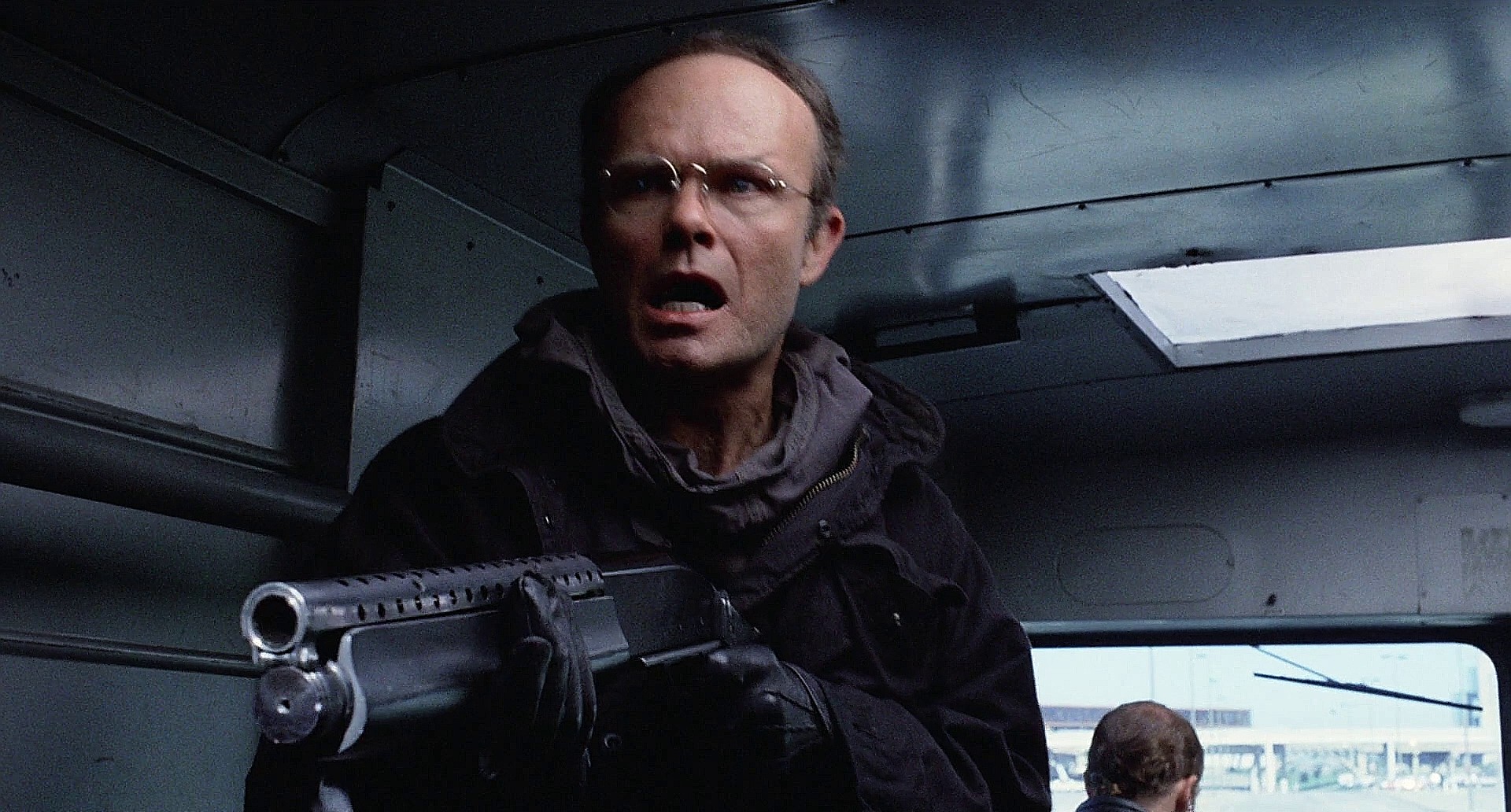 5.) Clarence Boddicker - Robocop
 6.) The Bride - Kill Bill
 7.) Dr. David Huxley - Bringing Up Baby
 8.) Del Griffith - Planes, Trains, and Automobiles
 9.) Marge Gunderson - Fargo
 10.) Dean Miller - Nightmare City


