


David Cronenberg Blog-a-thon: Videodrome

[This post is part of the David Cronenberg Blog-a-thon going on right now at Tony Dayoub's site Cinema Viewfinder. Check out the comments for this piece here]
What is probably one of the most unconventional horror films ever made, David Cronenberg's Videodrome is, perhaps, only matched by David Lynch's Blue Velvet as one of the oddest, most surreal horror experiences I've ever seen. Cronenberg's film is akin to Lynch's in the sense that both films sit on the fringes of horror (using the prototype of the genre to explicate darker, more postmodern themes that society marginalizes and deems taboo) and really ask us to consider what makes a horror film horrifying. It's not just the visceral nature of horror, and it's not just the getting-under-skin ideas at play – it's a mixture of both. On the surface both films seem to be something else entirely: Lynch's film is dark, yes, but it's also comical (mostly ironic in the way a lot of postmodern work is) in the same way Stanley Kubrick's The Shining (another film that stretches the genre) is darkly comical; whereas Videodrome is without laughs. There's nothing remotely comical about Cronenberg's exercise, an odd hybrid (as most of his movies are) of science fiction and horror; however, like Blue Velvet, there are deeper questions about sexuality and violence, and the effects those two things have (especially when combined) on society. Videodrome is as displacing a horror film that I've seen; a film that plunges the viewer into the depths of sexuality and violence to give us an otherworldly, uncomfortable experience that asks us not what we find objectionable about sex and violence, but how we consider platforms for these oft taboo subjects.
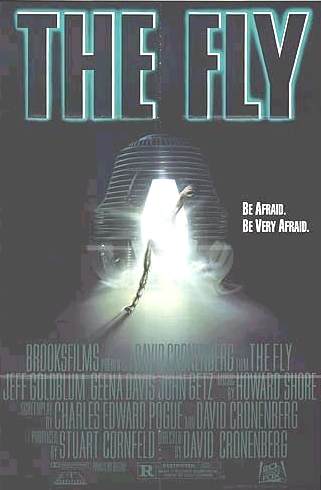
 The story is simple enough: Seth Brundle (Jeff Goldblum) is a genius physicist who has created a way to transport matter. Geena Davis plays Veronica, a reporter who is looking for an exclusive on Brundle's invention. Fearful that his secret will leak to the scientific community (which will cost him thousands) Brundle pursues Veronica at her office and pleads with her to not write the story until he has everything working for certain. Thus begins their relationship which soon blossoms into a romance. Veronica is just getting out of a relationship with her pretentious, yet caring, editor Stathis (played by the always smarmy John Getz) who is immediately jealous of the Veronica hangs on every word Brundle says. This was probably his affect on her sometime in the past. One night Veronica leaves Brudle's place to finalize some things with Stathis, however, Brundle too is weary of why she must leave and gets drunk, which leads to "something going wrong in the lab. Very wrong." You know the rest of the story from there.
 Yet, through all of the grotesqueness, Veronica still loves Brundle. And for all of the grotesqueness, the audience is still emotionally invested in the story; that is the triumph of The Fly and what Cronenberg is able to accomplish. Also, Cronenberg is able to conjure up suspense by element of surprise; we are never quite sure, once Brundle's metamorphosis takes place, what he is going to look like, or bad it's going to be. By keeping the audience guessing, the film does have a true horror genre feel to it, but it transcends the genre and cuts through the grotesque appearance of Brundle by maintaining the human element; the love Veronica has for Brundle, and him wanting her to remember him as he was, not what he is becoming.
 I wrote all of this with a bias as the driving force. There is something deep and profound and moving about this film that affects me so much. I haven't even mentioned that when we get to see the Brundle Fly at the end of the film, it is truly one of the scariest moments in horror. The final moments of the film are scary, no doubt, and if you haven't seen the film, and are not a fan of the usual stab and slash type of horror film, then rent The Fly. It's a brilliantly crafted, sophisticated horror film.


