Thursday, May 14, 2009

DVD Review: [Rec]


The Blair Witch Project is, whether you like it or not (and I have come to not really care for it as much as I once did, although that ending still gets me), a seminal horror film. It reminded horror fans, and low-budget filmmakers, that you could still subscribe to the Val Lewton philosophy of horror: what you can’t see is still what’s scariest. Jaume Balaguero’s [Rec] is a good example of what The Blair Witch Project did well, using an “on the scene” hand held camera aesthetic to heighten the panic, and a brilliant, creepy sound mix that, when you see that ending, will give you goose bumps long after the film is over. The scares are genuine; the sound mixing is great as the thuds, whooshes, splats, and other icky noises are what’s most jarring, not the gore; and clocking it at a brisk, albeit extremely intense, 75 minutes it’s a rare horror film that doesn’t overstay its welcome.


[Rec] begins with a plucky reporter Angela Vidal making the rounds at a local fire station interviewing various people on the job. She is reporting for the entire night for TV special, and when the firefighters get a call to tend to an apartment building…well that’s where the fun begins. It’s an “infected” movie, so if you’ve seen films of this ilk then you get a sense of what’s in store for you (be careful standing next to windows!); however, what you may not be prepared for is how Balaguero executes it all. Angela, the firefighters, the police, and all the tenants end up being quarantined (hey that would make a good title for a really crappy American remake!) off from society. What follows are your usual freak outs, gross outs, and crazy goings-on where people run for their life while being trapped in a building together.

The film is masterful at gradually building towards its tense moments. Moment after moment I found myself clenching tighter and tighter to whatever was around me: a pillow, a blanket, or just clinching my fist until my knuckles turned white. The compounding of such tense moments, until it is unleashed on the viewer like a rabid dog, is one of the great things about the film and what makes it such a unique experience. Horror is meant to scare you, yes, but it’s not just the act of jumping because something comes at you unrepentantly, it also is meant to exhilarate and thrill you, so that you don’t even realize you’ve been breathing until the very.

The ending is ridiculously scary; in fact, it’s one of the creepiest and most intense moments I’ve seen in any horror film. It reminded me of the way my stomach tightens during the ending of Alien. The ending is a brilliant mixture of the creepiest parts of the endings of The Silence of the Lambs and The Blair Witch Project; and when the big reveal comes out to shock you (and boy does it ever) it doesn’t seem tacked on or superfluous at all…it’s genuinely scary.

I also appreciated that the “on the scene” camera never became a contrivance. Despite the bit of exposition where Angela tells her cameraman Pablo that they must film everything no matter what, the camera never becomes a distraction. And by that I mean there are moments when bad things happen to people, and we see them, so obviously the cameraman from the news station is just sitting their watching and filming, right? Nope. Balaguero wisely has the camera being set down on the floor in multiple situations so that the cameraman is a character, not just a non-existent entity documenting the carnage. The filmmakers execute the “camera as character” trope perfectly as I never found myself being pulled out of the moment by saying: ‘why doesn’t the camera man just help them?’

Balaguero’s film is one of the great horror experiences, ranking along side Neil Marshall’s The Descent, as the definitive blueprint for how to do modern horror. Marshall’s film had the budget and élan, not to mention the seemingly endless supply of visual nods to past great horror films, that aren’t quite on display in [Rec]; but one thing they do share in common is not relying completely on gore, but rather relying on the use of darkness and sound to create a truly unnerving experience. Another good example of how sound is used brilliantly in modern horror is the first 45 minutes of The Strangers. That film totally botched its ending, but it was a perfect example of how when you strip your film of every horror gimmick and torture porn mentality – when raps on the door and giggles in the night are the creepiest parts of your movie – that’s when you know you’re onto something that’s truly scary and unnerving. Unfortunately, The Strangers flubbed its ending and turned into torture porn, but the point remains: these two modern examples, along with [Rec], show signs of hope for the future of horror. I think [Rec] is a masterpiece of the horror genre, and I’m just mad that I waited this long to see it. There is a sequel in the works, with all of the original filmmakers behind it, so we’ll see how that goes. Anything this good deserves to be seen multiple times; no matter how many sequels or bad American interpretations it spawns.

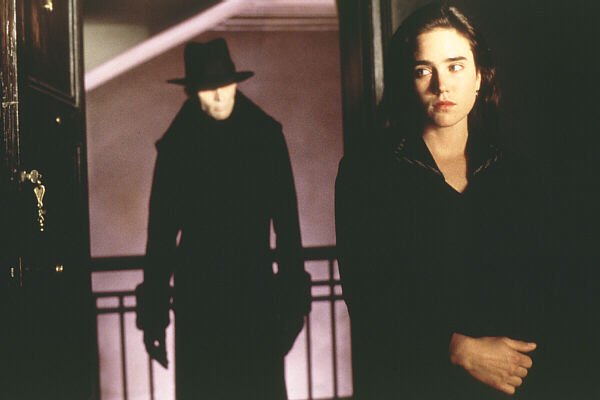
Lazy Blogger Repost: Dark City (Alex Proyas)


I'm busy with work right now, and I just don't have the energy to type up the DVD review for [Rec] that I've been meaning to put up for awhile now. So, I thought I would dust off an old favorite of mine (this is an old post that I put up when I started my blog last year in honor of the Director's Cut DVD, but this is something I had written well before, so I took the liberty of cleaning up any glaring errors) and give some always-deserved credit to one of my favorite films Dark City. I plan on seeing Che this weekend (both parts) so I'll be back with some thoughts there, and some more DVD reviews.

The first 15 minutes of Dark City are unlike anything I've seen in Science Fiction. Right away director Alex Proyas is showing us his interest in using Film Noir elements to mix with the Science Fiction genre to create a neo-noir film. Most of Film Noir is based on the innocent man being in the wrong place at the wrong time. These men are anti-heroes, usually privy to some kind of information they didn’t want to begin with; they're flawed individuals who would prefer to have the authorities figure things out, rather then risking their own life, . That is how Dark City begins. Murdoch (Rufus Sewell) awakens from a bath tab -- a rebirth of sorts, as he emerges naked and from water -- in an old hotel as an overhead light swings back and forth (we find out why later) and as he frantically searches the hotel for any remnants of who he is. Then, for the first 15+ minuets of the film he begins to attempt to piece the clues together quickly.

Technically Proyas and his editor Dov Hoenig are cutting this together at a rapid pace, like a comic book it is storyboarded for us with sharp jump cuts from static shots in order for the viewer to witness the clues in a startling manner much like Murdoch discovers them. The viewer is disoriented from the onset as Proyas begins the film in medias res, compounding the confusion and allowing the viewer to feel just as lost as Murdoch. The entire opening sequence is one of the most visually brilliant I've seen in film. It is all visual exposition as very little weight is given to dialogue to help guide the viewer towards certain truths. Proyas and cinematographer Dariusz Wolski (and don’t forget the brilliant art direction by Richard Hobbs and Michelle McGahey and the production design by George Liddle and Patrick Tatopoulos) create a world filled with allusions from German Expressionism and Film Noir, as well as evoking imagery from Edward Hopper’s “Nighthawks”; it helps if one is well versed in these visual allusions to understand what Proyas is trying to say about his characters. This is a classic neo-noir (or postmodern noir) film where the entire world the characters inhabit is nothing more than a simulacrum, a pastiche consisting, as one character explains, of architecture and clothing from different eras and the collected memories of the humans who live within the city. The film is German Expressionism, Science Fiction, Film Noir and Cyberpunk all rolled into one, and deserves mention along side such classics as Metropolis and Blade Runner


Like many science-fiction/noir hybrids Dark City is concerned with a race of artificial intelligence or some form of alien race -- here called the Strangers who don fedoras and trench coats like henchmen from a 1940’s Noir -- who are interested in the make up of the human soul. The Strangers have a method they call “tuning” where they can manipulate the city architecture at midnight and insert new memories into the sleeping humans. When they “tune” they stop time at midnight and proceed with their business. Here they have enlisted the aide of the only human to understand (besides Murdoch, who we come to learn can also “tune”) what is going on, Dr. Daniel J. Schreber played wonderfully by Kiefer Sutherland (who is doing his best Peter Lorre). Schreber is the one that was injecting Murdoch with his new memories when Murdoch woke and scared the good doctor away. We learn that Murdoch is apparently being pursued not only by the Strangers, but also by the police who are after him for the murder of six prostitutes. That’s about all the set up there is to this film as the rest is like a jigsaw puzzle where the pieces are laid out in front of the viewer at exactly the same time they are given to Murdoch. The Film Noir theme continues as the first shot we get of Emma Murdoch (John’s “wife”) is in cigarette smoked filled night club. She is right out of the 1940’s with her green dress, sultry voice (I mean it is Jennifer Connelly we’re talking about) and bright red lipstick. The image belongs more in a film like Out of the Past than in a Science Fiction film, but that’s what the neo-noir genre seeks, a pastiche of visual styles from the 1920’s and German Expressionism, to the Noir films of the 40’s to the stylized vision of Kubrick’s 2001, films like Dark City and Blade Runner look to create a disjointed universe by melding these genres together to create a setting that is ambiguous; therefore we are just as confused and disoriented as the characters.

Not only is the film one of the great visionary films of all time (watch some of the scenes frame by frame and you will see how meticulously it was put together), but it is also a great entertainment. As mentioned before, the film just starts right up with very little verbal exposition. The viewer is given the clues in the first 15 minutes and then must decipher what is going on. But again, Proyas is interested in the viewer being just as disoriented as the characters, so right when we think we have the pieces in place, Proyas throws a curve ball and everyone (including the characters) is confused again. This invitation for the viewer to get involved is shown through the character of Inspector Bumstead (the always entertaining William Hurt) when he explains (I’ll paraphrase) “I have all of the pieces to this jigsaw puzzle in front of me, and when I go to rearrange the pieces, nothing makes sense.”

I think what I liked most about the film was that it wasn’t interested in the pseudo philosophical dialogue that The Matrix made so popular. Dark City was released a year prior to The Matrix (which used some of the same sets as Dark City), but that film was much more interested in its own ideas and enjoyed listening to itself talk and talk and talk and then masked its lame philosophic and pseudo religious allegories with special effects and wall to wall action. As a genre picture, The Matrix works extremely well, but it doesn’t even begin to approach the greatness of Dark City. The amazing thing is that Dark City almost does it all in visuals, like Stanley Kubrick did with 2001. Proyas is a great visionary who prefers the poetry of the camera, instead of needless exposition, to further the story along.

Don’t get me wrong, there are great moments of dialogue written by David S. Goyer (Batman Begins) and Lem Dobbs (The Limey). For instance, when Murdoch tells Mr. Hand, one of the Strangers, that they went looking in the wrong place (as he points to his head) to find what makes humans human. What’s nice about this scene is that he doesn’t expand further into some cliché ridden diatribe about how the heart is where they should have looked and if you have enough heart you can do anything and then you will find what makes humans tick. Nope, Goyer and Dobbs do the right thing (along with Proyas’ direction) and leave it at Murdoch pointing to his head as he walks away. After all, like Metropolis, the film is about the heart of the cities inhabitants bringing down the ‘machine’ that lurks underground and controls their thoughts. The metaphor is clear, but it’s subtle touches like that scene with Murdoch and Mr. Hand that work so well in conveying this message without bludgeoning the viewer of the head with it; where one year later The Matrix would just continue to talk and talk and talk (I think Laurence Fishbourne is still talking) about what the film was about, rather than showing us. Also, consider this short little break in the film as Schreber takes Murdoch and Bumstead to the elusive Shell Beach (one of the clues in the film, I dare not give anything more away) and as they rowing their way down a river Schreber tells them about The Strangers and the cities mysteries:

I call them the strangers; they abducted us and brought us here. This city, everyone in it, is their experiment. They mix and match our memories as they see fit, trying to divine what makes us unique. One day a man might be an inspector, the next, someone entirely different. When they want to study a murder, for instance, they simply imprint one of their citizens with a new personality. Arrange a family for him, friends, an entire history, even a lost wallet. Then they observe the results. Will a man, given the history of a killer, continue in that vein, or are we, in fact, more than the mere sum of our memories? This business of you being a killer was an unhappy coincidence. You have had dozens of lives before now. You just happened to wake up while I was imprinting you with this one.

When they first brought us here they extracted what was in us, so they could store them information, remix it like so much paint, and give us back new memories of their choosing. But they still needed an artist to help them. I understood the intricacies of the human mind better than they ever could. So they allowed me to keep my skills as a scientist because they needed them. They made me delete everything else.


This artificial city with its false memories is of course a simulacrum, a dark world occupied by jagged construction that almost tears through the frames that try to contain them. Proyas is of course using elements of German Expressionism to visually tell us these things. Tilted shots, or Dutch angles, create an uneasy feeling. The viewer, like Murdoch, is not quite sure where this mystery is leading to. Another element of German Expressionism is the use of obtrusive and over exaggerated set pieces. This again plays to the idea that they are almost bursting through the frame, trying to break free, much like Murdoch and Bumstead when they peel back the Shell Beach poster and hammer away at the brick wall that lies behind it, they are trying to break through the barrier of the dark city.

Another crucial moment is this piece of exposition later in the film, which ends up being the turning point for Bumstead as he talks with a retired inspector named Walenski, who was the investigator of the prostitute murders prior to Bumstead:

Walenski: Well, nothing happened Frank. I’ve just been spending time in the subway, riding in circles, thinking in circles. There’s no way out. I’ve been over every inch of this city.
Bumstead: You’re scaring your wife to death, Eddie.
Walenski: She’s not my wife. I don’t know who she is. I don’t know who any of us are.
Bumstead: What makes you say that?
Walenski: Do you think about the past much, Frank?
Bumstead: As much as the next guy.
Walenski: See? I’ve been trying to remember things, clearly remember things from my past. But the more I try to think back, the more it all starts to unravel. None of it seem real. It’s like I’ve just been dreaming this life and when I finally wake up I’ll be somebody else. Somebody totally different.
Bumstead: You saw something, didn’t you Eddie? Something to do with the case?
Walenski: There is no case, there never was! It’s all just a big joke! It’s a joke!


These little moments of dialogue are nice compliments to the frantic and kinetic chase that occupies most of the film. They offer insight into the films larger themes by being concise moments of insight that allow the audience to think about the questions, rather than having the characters hammer home the point. But it is still the visuals that will always be remembered. The special effects add to the film rather than overshadow it, and the constant use of obtrusive angles and exaggerated set designs creates a world of chaos (like the spiral imagery throughout the film, which thanks to the DVD commentary by Roger Ebert, I was able to learn that the symbol of the spiral is associated with chaos theory) and disorientation, a simulacra, or hyperreality where nothing is as it seems. The character of Bumstead runs in circles, and circular logic, trying to explain away what is happening rather than pursuing a form of action and finding out what is going on, when he is invited by Murdoch to find Shell Beach and he helps Murdoch ‘break down the wall’, the Inspector crosses an important threshold. In order to find out who he was, he had to act. Bumstead and others break from the spiral and the circles to become human, it is in the breaking out of the spiral (look at the shot where there is an overhead view of the city, it is spiral in nature) where the inhabitants of this artificial city cease to be artificial themselves, and become fully realized, fleshed out people.

For the astute film watcher there are numerous allusions to Metropolis (the underground lair), M (where all you see are the anemic faces underground, like in the trial scene), Blade Runner, and 2001. You can also see allusions to Carol Reed’s brilliant The Third Man whose images of bombed out postwar Vienna streets creep into Dark City’s imagery as Murdoch spends much of his mystery searching through dark alleys and shadowy corridors. It is a film few can match in its visual splendor.

I will end with this excerpt from Roger Ebert’s essay on Dark City:

Notice an opening shot that approaches the hotel window behind which we meet Murdoch. The window is a circular dome in a rectangular frame. As clearly as possible, it looks like the "face" of Hal 9000 in 2001. Hal was a computer that understood everything, except what it was to be human and have emotions. Dark City considers the same theme in a film that creates a completely artificial world in which humans teach themselves to be themselves.


The humans that occupy Dark City are the toys for the Strangers, cadavers used for scientific purposes. As Murdoch explains (and I mentioned earlier) they were poking and prodding the wrong place, it is the heart that can teach you about humanity, and we can talk and talk and talk about it all we want, we can sound wise like Neo and Morpheus, but it is in action where we find humanity, and Murdoch and Emma and Bumstead and even Schreber understand that they have to “teach themselves to be themselves” by acting on what their heart wants, not trying to put the jigsaw puzzle together, pontificating all day (or night in this case), only then will Murdoch and Emma (and all of us) truly be alive -- otherwise we're just running in circles.

Dark City
is one of my favorite films, and I think it easily ranks in the top 10 of the 90's. There hasn't been a science-fiction film released since that rivals it, and visually, few films, no matter what genre, have matched Proyas' visionary opus. It's a shame that Proyas has pretty much disappeared. He made the incredibly dull, but financially successful, I, Robot, which looked good enough, but lacked the emotional punch of his previous films (hell, even The Crow had more of an emotional arc than I, Robot); five years after that film he released the ridiculous looking Knowing starring Nicolas Cage. Roger Ebert gave the film four stars, and that coupled with the fact that I will always be interested in what Proyas produces, has my interest piqued enough to where I can ignore the rest of the negative reviews surrounding the film. However, nothing will match what he did with Dark City, and sadly his career has been akin to a Wellseian type fall -- Proays made his best film when he was 35 in what was only his second American film; but what a film it is, and really, most directors wish their entire oeuvre were as good as Dark City.

Monday, May 11, 2009

Revisiting 1999: The Forgotten Films --- The War Zone (Tim Roth)


This is one of many posts that I'll hopefully be putting up every Monday to close out my Revisiting 1999 project. This is the first film in the "forgotten films" category. For a recap of why I'm doing this click here; and for thoughts on other films from 1999 click here, here, and here. This week it's Tim Roth's forgotten masterpiece The War Zone. Next week I'll look at Ralph Fiennes' greatest performance in the forgotten family saga Sunshine. Look for these every Monday.


One of the forgotten masterpieces of 1999 was Tim Roth’s The War Zone, a brutal look at an isolated family and the seemingly happy existence they live out in an old coastal house, miles away from any city or anybody. This is a film of deep hurts, painful secrets, and truths, which for some characters, are better not unveiled, so as to not disrupt the community the family has worked so hard to solidify.

And the family does indeed live like a close knit community. They’re comfortable with each others bodies as there a warmness and familiarity to their mother (Tilda Swinton) nursing the newborn daughter in the kitchen; or dad (Ray Winstone) walking around the house naked; or Tom’s (Freddie Cunliffe) sister Jessie (Lara Belmont) comfortably sitting topless in front of her brother. It all seems quite medieval and normal for this family, a family who we learn escaped the “normalcy” of the city so that they could retreat to a more holistic, communal setting; which indeed becomes a war zone.


The story concerns Tom, 15, and what he sees one day when coming home from the city with his mother. He happens upon an incident that may, or may not be, a big deal: his sister and father in what looks like the two of them in the bath together. Jessie, 18, claims that she was taking a bath and when she was done her dad came in and got in the tub as she was getting out – Tom thinks he saw differently. The question now full entrenched in Tom’s mind about his father is the catalyst for an investigation that brings forth so much hurt and pain and deep family secrets.


After Tom sees what he sees in the bathroom (which Roth wisely never shows the audience) there’s a great POV track of Tom heading towards his dad, and then, at that moment the audience can draw the conclusion that it somehow involves him. Tom stares at his dad with the eyes of someone who’s been told to mind what they can’t understand. There’s a teeming, buried past of hatred and secrets that is ready to burst the bubble of this tranquil countryside family.

Tom’s “investigation” and weariness of his father, is executed by Roth in a nuanced and intimate – almost to an uncomfortable level – manner, just like a Bergman film would be. Tom’s knowledge is ready to ruin every seemingly happy family outing. There’s a scene in a pub where Tom will do anything to get away from being around his dad, and he looks upon him with such disdain; then there’s a crucial moment where Tom almost usurps his dad’s reign over their community when he refuses to take some of his dad’s money. It’s a crucial moment for Tom; at that moment he’s decided he doesn’t want to be anything like his dad, who at this point in the film seems like a loving, caring father.


It all goes to hell when Jessie and Tom come back late from a trip to the beach (where it is insinuated that Jessie has had sex with her boyfriend Nick, played by a young Collin Farrell) and the relationship between Tom and dad becomes even murkier. Tom then finds some naked pictures of his sister. At first he is merely shocked by her sexuality – her playfulness – then he finds one of her and her dad, and realizes that what he saw in the bathroom is not only proof that Jessie lied to him, but proof that there is something incestuous going on.

Tom then brings a camcorder to catch them in the act, and he does, and what follows is a scene that makes this film so excruciating to get through a second time. It’s brutal and unflinching – and quite cerebral on the father’s part. What makes the scene even more wrenching is the fact that the daughter, who was all for the father’s playfulness earlier in the film (being naked in the same room together is one thing) weeps uncontrollably as she any remnants of sexual vivacity is raped from her – it’s as if in one fell swoop her father is doubly getting what he wants: her body and her future; surely there will be no more adventures on the beach after this horrifying experience. After the brutal scene is over all that you can hear are the breakers smashing against the rocks – a perfect metaphor for what is going on inside of Tom, who has just witnessed the act and caught it all on tape.


Roth uses a lot of establishing shots. He introduces the house the way a horror director would, framing it to look like an eerie landmark where dark secrets lurk. Roth also uses sound brilliantly in the film. There isn’t a lot of it – the film, from a post production standpoint, is about as bare bones as you can get – adding to the excruciatingly painful truths that lurk in their home. Each scene is filmed in uncomfortable silence or with sparse haunting notes of piano keys; the sound of the breakers, of a squeaky floorboard, the metal clang of a door slamming shut, and all the emotions these sounds evoke: loneliness, isolation, instability, coldness – they all help Roth in establishing the metaphors the same way Bergman would.

There are multiple shots of Tom dwarfed by his surroundings, the vastness that envelops him is the perfect metpahor. He has an incredible burden on his shoulders, and he is utterly alone in what he is feeling. What makes Roth’s film so truthful and powerful is the fact that Tom’s decision to blow the whistle on his sister and dad is not so cut and dry; he doesn’t want to be the one who ruins his family’s happiness; which is precisely why after catching that horrifying act between his sister and father on tape, he throws the camera to the rocks. That moment belongs solely to this place; Tom consciously chooses not to carry this horror with him when he returns to the city.


In Roger Ebert’s review of the film, he wonderfully (and succinctly…sorry I just can’t be succinct!) comments on the films harsh themes: “The movie is not about incest as an issue, but about incest as a blow to the heart and the soul--a real event, here, now, in a family that seems close and happy. Not a topic on a talk show.”

Which makes Roth’s film even harder to sit through; there are no easy answers here, and when you see that awful scene, there is a thin line of ambiguity that underlines it. During the “sex” scene, is she crying because of how awful the act is, or because the act is physically painful? It’s not as easy a question to answer as you would think considering the attitude of the sister after the event. Are these her feelings, or the feelings her father has corrupted her with?


When Tom finally confronts his dad there are many things said and tears shed, and the outpouring from the father at the end of the film is more a confessional – a crying out to the sane part of himself, the part that’s a good father who tells amusing anecdotes – to stop the nonsense with his daughter, instead of what seems like a verbal lashing against his son. Sure he’s angry at Tom for exposing the truth, but the scene is blocked by Roth in a way where the father’s yelling seems more directed at himself than his son. When he can barely utter the words “you’re breaking this family up” and “what are you doing to me”, the scene takes on a whole new meaning: he’s trying to talk some sense to himself. It’s a powerful scene that showcases why Winstone is one of our best actors.

Of course once cooler heads have prevailed, the father will do anything to keep the secrets under wraps, and there’s a calm, almost sinister, conversation that takes place between his son and daughter at the end of the film that ends with a shock.

There are a lot of polarities that Roth explores: Medieval vs. Modern, Innocence vs. Experience, and Secrets vs. Information; and they’re all explored brilliantly, and without a hint of cynicism. Consider the scene immediately after Tom confronts Jessie about having sex with their father. Jessie responds by trying to usher her brother into her world of sexuality. Jessie gets an older woman to seduce Tom in an ambiguous gesture that is hard to decipher: is she just acting as an older sister trying to help younger brother get laid? Or, is she trying to show him that sex with an older person is not so abnormal. The scene, however, takes on a whole different meaning when the older woman announces: “I could be your mother.” He makes a clear distinction between his family and the act when he says “no you couldn’t.” He wants no part of anything that represents what his father and Jessie partake in. Then Jessie interrupts the act, it’s almost a cerebral “gotcha” moment as if to show Tom that he’s no different than she is.

The War Zone is a sucker punch to the gut; it stops you in your tracks and places you in a moment of contemplative sadness that is rarely found in films not directed by Ingmar Bergman. It’s a hard film to sit through, it’s as devoid of happiness as the drab gray skies that line the coastline throughout the film; but to borrow a credo from Roger Ebert: no good movies are depressing, only bad one’s. This is a great movie, a forgotten masterpiece from 1999, which deserves to be (re)discovered.

Extra stills that, if you've seen the film, may spark discussion in the comments section (I think the first still of Jessie and Tom sitting together like they're in prison is an apt and powerful image):


Saturday, May 9, 2009

Movies I Can't Resist on Television


If any of you out there have a sleeping problem (I'm convinced I go through spurts of insomnia) then perhaps you remedy that the same way I do: by watching lots of bad late night action film on TV. These usually end up being the same movies over and over, and I've come to realize that I have a certain "go-to" set of movies, that whenever they're on TV, I get sucked into watching. Now, this happens just as frequently with legitimate movies, but more often than not, when I'm at home decompressing after work, I'll find myself looking for the lamest action movie on TV. Case in point: late last night I couldn't sleep, I turn on the TV and had a choice between Tango & Cash or Showdown in Little Tokyo. Decisions, decisions. One one hand Tango & Cash is Tango & Cash, but on the other Showdown in Little Tokyo has Dolph Lundgren, and it was directed by Mark Lester, the brilliant mind who gave us Commando. More thoughts on why I chose what I chose after the jump, with a clip you won't want to miss...


Anyway, I went with Tango & Cash, even if I have seen it about ten times already, because it has all the cliches of 80's buddy cop films...and Jack Palance as the villain. How can one go wrong there? Oh, plus it has this as its opening:


Click here to watch video


Man I love Stallone's STIFF line reads, the generic 80's cop dialogue ("I want your badge!", "You're out of your jurisdiction!") and the even more generic 80's cop moments like tasting the cocaine to see if it's real. Also, the line about Rambo is brilliant.

So, this got me thinking about bad action movies that I always watch on TV, no matter how many time I've seen them or how familiar I am with the film's rhythms. Once you see the movies on this list you may think to yourself: "but Kevin, life is too short to be wasting your time watching THOSE movies over and over, watch something better." But, the truth is I don't watch TV all that much, I still watch re-runs of "Seinfeld" and "The Simpson's" and some DVD episodes of "The West Wing" and "Deadwood", but I never really got into TV, and so my way of decompressing or "trash" TV is to watch 30 minutes here, 20 minutes there of the following movies (converted to a top 5 list for convenience):

1. The Rock - no matter how much I hate Michael Bay I have to hand it to him...this movie is an amazing exercise in the action genre. My fiance can attest to the fact that whenever this is on TV (which is a lot) I will always stop the channel surfing and take a nostalgia trip to when I was in 10th grade when The Rock came out. In fact, she's probably seen the film in its entirety, just out of order. But still, I can quote this movie pretty much word for word when I'm watching it -- and yes, I know how sad and pathetic that it.

2. Robocop - Another movie that is on free TV and IFC all the time. I never get tired of this one, either. Especially the ED-209 scene and the Benny Hill parody with the guy that says "I'll buy that for a dollar!" Plus the film is just a masterpiece of violence and has the greatest villain in 80's action cinema: Clarence Boddicker.

3. Lethal Weapon 1 and 2 - Nothing brings me more joy than watching Danny Glover and Mel Gibson play their most famous movie roles to 80's action perfection. These are the epitome of the action film in the 80's: their well acted, well crafted, and never grow tiresome. The first film has amazing scene after amazing scene, in fact you kind of feel like the movie gives you the best value for your time (when it comes to action films)...plus it has Garey Busey as the psychotic (shock!) mercenary Mr. Joshua. Also, Danny Glover's favorite line "go spit!" The second film, amazingly, is just as good as the first one. It's one of the rare occurrences where the films sequel either surpasses or lives up to the original (T2, Spider-Man 2, and Gremlins 2 are the only other sequels I can think of off the top of my head that do this) as it matches the originals energy. Plus Joe Pesci getting "effed" in the drive-thru and a house on stilts -- can't go wrong there.

4. Cliffhanger - Say what you want about Sly and director Renny Harlin (the fact that they don't have the greatest resumes is certainly true), but this early '90's action film is pretty spectacular, and always catches my attention when it's on TV. It has one of the most intense (I'm being serious, because I'm afraid of heights) opening sequences I've seen in any action movie. Plus, it has Michael Rooker in it, and John Lithgow as the villain. It's just your classic Die Hard formula, only on a mountain!

5. Terminator 2: Judgment Day - Another film that I can quote all the way through when I watch it. I never get tired of this movie, and surprisingly, the effects still hold up, and it serves as a reminder how brilliant James Cameron was at making intense action pictures. Totally different than the first Terminator, the sequel upped the ante big time and cam off more an all-out action film than a sci-fi/horror film. Robert Patrick made a name for himself as T1000, the creepy evil terminator, and who can forget Linda Hamilton looking all scary throughout the movie, ready to shoot anything metallic? It's the perfect example of a movie, that no matter when I happen upon it, will always suck me in because it was such a huge part of my childhood. This was one of the first movies I watched religiously so that I could know everything about it.

Anyway -- there are of course really good movies I choose to watch multiple times on TV (and to be truthful some of those action films above are some of the most brilliant of their genre) or on DVD. Whenever I see 8 1/2 or Fargo or Quiz Show, I immediately set the remote down and just drink in familiar scene after familiar scene, because there's just something comforting about the familiarity I have with those movies. And the same goes for the list above: those films calm me down at night or just put a smile on my face that few things can. I have an affinity for watching bad action films because that's what I grew up with. Sadly, I could probably tell you everything that happened in Van Damme's Double Impact or Seagal's Out for Justice (another movie I stop for a lot when it's on TV), because I prefer bad action films in order to help me decompress, or simply entertain me in my sleep deprived state when I'm having a fit of insomnia.

So, my question to all of you: what movies do you have trouble resisting whenever they're on TV? They can be good movies or "bad" movies like my list above. I'm just curious to see what some of your steady, fall-back films are when you've had a rough day or just need to decompress...you're flippin' through the channels, what is it that you stop on?

Thursday, May 7, 2009

Counting Down the Zeroes 2001: Heist


Here is my second entry (fourth overall) for Film for the Soul's brilliant, and impressively exhaustive inventory of the films from the 2000's, Counting Down the Zeroes. The film I chose for my second go-round with the films from 2001 was David Mamet's underrated thriller Heist. And don't forget to check out the other fine entries at Film for the Soul.


Heist opens with a classic 1940’s black and white Warner Brothers symbol; setting the mood throughout that this is going to be a classic noir picture: haggard criminals who do "one last job", heists gone wrong, double crosses, double speak, brilliant actors who play bad guys that steal every scene they're in, and of course there's a femme fatale. Heist is also like those classic 1940's noir films in that it's heavy on attitude and style; it's a noir with filthy, wonderful Mamet language. David Mamet’s 2001 film is one of his least revered, and it’s understandable if you’re a Mamet veteran, than everything in Heist seems second rate compared to his much better films. However, I feel like Heist is one his most entertaining films: it has arguably his greatest cast spouting off some of his most hilarious dialogue (although State and Main gives this film good competition; and no I’m not counting Glengary Glen Ross because Mamet didn’t direct that.).

Heist is a typical Mamet film – a con on top of a con on top of a con, and I’ll be the first to admit that this is definitely his most convoluted thriller that definitely reminds the viewer of the better cons he’s pulled: House of Games and The Spanish Prisoner. If you’re well versed with Mamet and his con films, then nothing here will likely surprise you; and perhaps that’s where some of the backlash or laissez faire attitude comes from in regards to Heist. There’s still some fun “gotcha” moments that one expects from Mamet, and as always, the dialogue is hilariously irreverent, inane, nonsensical, and of course brilliant.


The story concerns Joe (played by Gene Hackman in on of his last truly great performances) a semi-retired criminal who seeks the good life because he’s been “burned” (caught on tape) after a recent jewel heist goes wrong. He’s accompanied by his team: Fran his wife (Mamet’s wife, and muse, Rebecca Pidgeon), Bobby (the always great-to-see Delroy Lindo), and Pinky (Mamet stalwart Ricky Jay). The group meets with Bergman (the invaluable Danny DeVito, who gives one of his best performances – the man was born to be in a Mamet film) and his nephew Jimmy (Sam Rockwell) to go for one last score: a Swiss airline is bringing in a ton of gold and they’re going to steal it.

And from there the typical Mamet plot conventions kick in. When they finally get to the big heist scene the plot is under a cloud of suspicion; a position that Mamet prefers the audience is in. The heist scene is wonderfully staged, but as is the standard with most Mamet films, you can never be quite sure if what you’re seeing is supposed to the real thing, or a magic trick, a clever ruse to fool the unsuspecting victims in the film. Therefore, some of the tension is subdued because Mamet veterans know that what you see is not what you get…so you’re constantly waiting for that “real moment” to happen. Still, it’s a damn fine heist scene (although my enthusiasm may be a tad tame since I just watched the greatest heist film ever made a few nights ago, Le Circe Rouge, so this pretty much pales in comparison to that film’s seminal, and masterful heist scene).

It’s no use trying to explain the intricacies (or contrivances) of a Mamet plot, so I think the best thing to do for the rest of the review is to give an example of why we all watch Mamet films in the first place: the insanely brilliant and nonsensical dialogue. Here are some of my favorite bits from the movie, enjoy:

Coffee Cart Man: Hey buddy. You forgot your change.
Joe Moore: [Takes the change] Makes the world go round.
Bobby Blane: What's that?
Joe Moore: Gold.
Bobby Blane: Some people say love.
Joe Moore: Well, they're right, too. It is love. Love of gold.

Fran Moore: Stay in the shadows.
Joe Moore: Hey, everybody's gonna be looking in the shadows.
Fran Moore: So where's the place to be?
Joe Moore: The place to be is in the sun

Bergman: “My nephew Jimmy Silk, yup, that’s who he is.”

Bobby: “You know why the chicken crossed the road, because the road crossed the chicken.”

Bergman: “Everybody needs money. That's why they call it money.”

Jimmy: So, is he going to be cool?
Pinky: My motherfucker is so cool, when he goes to bed, sheep count him.

Jimmy: No one can hear me.
Joe Moore: No one can hear what you don't say.
Jimmy: Hey, I'm as quiet as an ant pissing on cotton.
Joe Moore: I don't want you as quiet as an ant pissing on cotton. I want you as quiet as an ant not even thinking about pissing on cotton.

Pinky: It's a shame you know what, we didn't actually get to do the thing, the swiss job. It's a beautiful plan.
Joe Moore: Cute, huh?
Pinky: Cute as a pail full of kittens.

Pinky: Oh my, oh my. Go sell chocolates you Heidi-motherfuckers, go sell cukoo clocks, we got your gold!

Jimmy: How long has he been with that girl?
Pinky: What girl is that?
Jimmy: His wife.
Pinky: How long is a Chinaman's name?

Bobby Blane: Sometimes adrenaline gives people the shakes, some might think it's cowardice, so maybe you'd want to pray about it.
Jimmy: I'm not a religious man.
Bobby Blane: There's nothing wrong with prayer. We knew this firefighter, this trooper, who always caried a bible next to his heart. We used to mock him, but that bible stopped a bullet.
Jimmy: No shit.
Bobby Blane: Hand of God, that bible stopped a bullet, would of ruined that fucker's heart. And had he had another bible in front of his face, that man would be alive today.

Bergman: Where's the gold?
Joe Moore: In the heart of the pure.


Back to the film: The acting is great across the board here, and there’s no doubt that Danny DeVito was made to make a Mamet film. It’s too bad DeVito wasn’t around during the heyday of noir; he could have had a lucrative career playing the slimy crime boss. He has a great scene here where people start shooting each other and he wildly tells people to stop shooting because they can talk it out. It’s a hilarious scene that I can really only imagine someone like DeVito executing.

Gene Hackman is his usual great self, here, and really this film acts as a reminder of how much I miss seeing Hackman in films today. It’s too bad Hackman hasn’t really made anything since. He pulls off the beleaguered Joe really well, and he more than handles Mamet’s dialogue. It’s just a shame that this great actor retired with Welcome to Mooseport as his last film.

Despite all of the praise I’m throwing at this seemingly mediocre picture, it’s not as if I don’t understand the negative response towards the film. Perhaps the expectations were too high, though, and considering the last film he made of this ilk was the brilliant The Spanish Prisoner, I think it’s fair to say that some people haven’t given Heist a fair shake due to unfair comparisons.

I feel like this era of Mamet is one of his finest, and most underrated. In 2000 he made the fantastic comedy, State and Main, then followed up with this extremely enjoyable thriller, and then later came Spartan, a film I think is one of the most criminally underrated of the noughties (I know I’m probably alone in that camp, but I think the film is brilliant.).

Heist is a film that becomes clearer, not more ridiculous, upon second viewing, and that’s what I love about Mamet films – most films of this ilk worsen upon subsequent viewings because the holes in the plot become bigger, more noticeable; however, with Mamet’s con-game films, they become richer with each viewing.

Wednesday, May 6, 2009

DVD Review: Le Cercle Rouge


There’s a certain kind of aura to Jean-Pierre Melville’s films; a kind of gravitational pull that sucks you into the story and places you in the most wonderful kind of reverie. True, there isn’t much that “happens” in Melville’s films, but they are always teeming with a confidence, a certain suaveness that is seen through all of Melville’s characters, especially Corey and Vogel from Melville’s 1970 crime masterpiece Le Cercle Rouge. When one watches Melville you know you are in the hands of a master.

Like all of Melville’s films there is a deliberate pace, with minimal post production, that allows the viewer to sit back and fully take in what is happening on the screen. There may be a scene that goes on for five minutes that contains two people looking at each other, but these scenes are never plodding, rather they allow the viewer to fill in the blanks, drawing their own conclusions about the histories Melville’s characters might have shared. When you watch a Melville film you are in the presence of a master hypnotist; it’s a state of reverie you won’t find in any of the other French New Wave filmmakers – who always seemed to want to distract you with a barrage of freeze frames and other New Wave tactics. Rohmer, Resnais, Malle, Goddard, and Truffaut; all of them shrink in comparison to Melville, and Le Cercle Rouge is a perfect film to admit as evidence.


Loneliness is not what you come to expect from crime/caper films; nor are deep existential themes: themes of chance, happenstance, and a general “what if?” feeling. Where’s the fun in that? Jean-Pierre Melville’s Le Cercle Rouge tackles some of these unconventional themes (for a crime film, anyway); however, it’s also an utter joy to watch in addition to being deeply contemplative.

The film begins with a quote from the Buddhist Ramayana that gives the viewer some insight into how the film will play out. The quote mentions that people who perform the same duties will eventually meet within the red circle. Luck, chance, or happenstance is what guides these people into the red circle. The two characters who encounter each other through chance are Vogel (Gian-Maria Volonte), a recently escaped convict, and Corey (Alain Delon), a recently released convict. Corey knows of a heist that “can’t miss” from a police guard in the prison who is actually friends with Corey.

Corey, upon his release, pays a visit to his old mob boss Rico. Corey steals his gun and some money and then tells him he’ll pay him back. He then leaves to play some billiards late at night (an old stomping ground perhaps), and it is here we see what Corey is capable of doing as he quickly dispatches two henchmen sent from Rico. Corey then buys a car, stops to eat at a restaurant, and there is when he and Vogel will meet.

Vogel has just escaped from a train, being guarded by policeman Mattei (André Bourvil). Mattei knows Vogel better than anyone, and like any good Melville film, the opening of the film is played out with little to no exposition; so, it’s on the viewer to try to fill in the blanks and the assumed long standing cat/mouse relationship these two have. In a wonderfully executed (and mostly silent) escape scene, Vogel finds himself at the diner that Corey is at. He hops in the trunk of his car, and when Corey is at the next check point (the police have set up barricades to look for Vogel at this point) Corey claims that the dealership never gave him the key for the trunk, when at an earlier check point, before Vogel jumped in his car, he opened the trunk, no problem. Again, this is one of those brilliant little moments that Melville stages that says so much by saying so little, and the onus, once again is on the viewer to make that connection.

Corey and Vogel finally meet as Corey drives out into the middle of nowhere and tell Vogel he can come out of the trunk and that he’s safe. Corey tosses him some cigarettes as a sign of friendship, and these two professional criminals can tell just by looking at each other that they can trust one another, and that Corey saved Vogel because of the unwritten code that criminals abide by.

That’s essentially your set up for what is a fantastic, and highly influential, crime film. Vogel and Corey recruit Jansen (Yves Montand), an ex-police sharpshooter to join their jewel heist plans. Mattei, searching for Vogel still, now realizes that he may be searching for more people. He is under a lot of pressure from his boss, the police director (who is pure existential style gives a speech about how all men are guilty) so he visits an old informant friend Santi, the owner of the nightclub, to help him act as an informant and bring down Corey and Vogel.

The plot is intricate, but executed in the most simplistic, minimalist way possible – that is not to say that the film isn’t deep; rather, its simplicity allows for those wonderful moments of contemplation I alluded to earlier: where the viewer is drawing their own conclusions and creating their own past histories for these characters. The film contains scene after scene of brilliantly understated coolness. It all leads to one of the most brilliantly executed and taut heist scenes I’ve ever seen in a film – all without the aid of post production or unnecessary expository dialogue during the scene. The heist scene is at least 30 minutes long, but the scene is filmed as if the viewer were doing the job with the criminals. It’s highly effective and never boring; it’s definitely the highlight of the film, and Melville didn’t have to ‘sex’ up the scene to make it more ‘interesting’ or ‘entertaining’ for the viewer – he trusts the scene to be interesting enough to keep the viewer on the edge of their seat. That is what makes Melville’s films so fascinating: he doesn’t have to say much for the viewer to draw some pretty deep conclusions about the film. Plus, compounding on all of that is the very basic element (and ultimate goal of film) that this film is extremely entertaining.

Melville has had somewhat of a resurgence in the last ten years. He’s now getting the recognition as one of the premiere New Waver’s, and his influence is all over the films of directors like Steven Soderbergh (more aesthetically than anything) and especially Jim Jarmusch (Ghost Dog has a lot of Melville in it, think of the deliberate pace of that film, as well as other Jarmusch films that are existential exercises that say very little and allow the view to contemplate the film has it is happening).

His Influence on Soderbergh’s Ocean’s Twelve, specifically, is apparent: everything from the locations, to the way they pull of the heist, to the way Soderbergh dresses up Casey Affleck to look like Corey. Soderbergh has always been indebted to the French New Wave with his copious amounts of zooms (both pulling in and out) and his love jazzy music accompanying his camera on a long pull in, usually focusing on a woman walking down the street (I’m specifically thinking of the introduction to Catherine-Zeta Jones’ character in Ocean’s Twelve; very New Wave). So, it’s great to see these two great filmmakers taking after a somewhat forgotten (until recently) figure of the French New Wave.

I mentioned earlier about the loneliness found in the film: this is not the style of crime film that Scorsese would popularize a few years later with Mean Streets, then in the 90’s with Goodfellas, and culminating in Casino: all films about professional criminals (specifically Italian mobsters/gangsters in Scorsese’s world) that experience varying degrees of success, only to come crashing down by the films climax. So too do Vargas and Corey experience some good times, mostly in regards to their new found friendship – the heist goes off well, too – but how fitting that Melville end his suave, confident crime film about suave, confident criminals with his two main characters shot and dirtied, their downfall is not as operatic or theatrical as Scorsese’s gangsters, but it’s just as tragic.

As mentioned earlier the film is not merely an existential contemplative exercise – it has style to spare. Melville’s aesthetics are nothing like his fellow New Waver’s, he is far more subtle, but Le Cercle Rouge’s attitude is in the same spirit as Godard’s film, for instance, and you’re always certain that you’re in the hands of a master. Melville gives most of his actors the onus of carrying the attitude and portraying the suave criminals, so that the effect is far more subtle. Consider Corey: he never shoots anyone, but when he holds a gun, he looks like he knows what he’s doing with it. Look at the way Melville’s characters smoke a cigarette – countless filmmakers have probably coached their actors on how to be cool by referencing Melville, and specifically this film. That attitude and style elevate it from being simply a morose, existential character study about the loneliness of criminals (although that is definitely lurking in Melville’s films, especially Le Samourai). Melville, more than anything else, seems interested in the camaraderie, the friendship of this rag-tag group of criminals that occurred through mere happenstance. If Corey’s trunk wouldn’t have been available, then he would have never met Vogel.

About chance: this is something that as a professional criminal you would not subscribe to. Look at the contrast between the meticulously planned heist at the end of the film, and the chance meeting between Corey and Vogel. Melville likes to play with the notion of happenstance and how it ultimately acts as the downfall for these criminals; which makes sense, because really a criminal who relies solely on luck is bound to get caught.

The film is also a masterpiece in mis-en-scene. Consider the still above: Corey is talking with Jansen about selling off the jewelery they just stole. Jansen explains to Corey that he doesn't want his cut of the loot. Corey has freed him of his demons (there is a very bizarre nightmare scene as we are introduced to Jansen, as obviously he did something as a policeman that he wasn't proud of) and that is enough of a payment. An odd thing to say for a criminal, and look at the picture on the wall as Corey and Jansen are talking. There's a gun pointed a Corey, knowing that he is about to set foot in a trap Melville slyly foreshadows Corey's suicide mission of selling the jewelry to someone he's never sold to before. It's a great piece of blocking by Melville, and it's evident throughout his films.

I have a special affinity for Melville: when I was about 13 I was a huge fan of John Woo, especially is beautiful ballet of violence The Killer. When I read an interview with Woo stating that Melville’s Le Samourai was the inspiration for his film, specifically the main character played by Chow Yun-Fat, I immediately ran out to find a copy of Melville’s film. Well the film was a little too slow for this 13 year old, but something did indeed happen while I watched the film: I realized that film didn’t exist just to keep us busy with bullets flying and explosions on screen. My eyes were opened to the possibilities of what film could offer; so, even though I kind of thought Le Samourai was boring then, I stuck with it until the end, and found it to be one of the most rewarding film experiences of my life. It ushered me into a new kind of film-going experience, an experience that now included an array of films from all over the world, and I now saw that film could be thought about during the viewing of the film: Melville’s film invited me, offered me the opportunity to contemplate what the film meant in between scenes, not just when the credits rolled. That’s when I was hooked. So even though my assessment of Le Cercle Rouge may be a bit biased, containing just the slightest taint of nostalgia, I don’t think that’s such a bad thing. It’s a great entertainment, a great contemplative film, and a great example of why the French New Wave was so hugely popular and influential.


There is a remake in the works with Chow Yun-Fat, Liam Neeson, and (gulp) Orlando Bloom as Corey. You can read about some of the details on imdb.


Monday, May 4, 2009

Lazy Blogger Syndrome...

Today may be the most disgusting day I've lived through in Oregon. It's been dark and rainy non-stop since early this morning -- not the ideal weather to instill inspiration. I've been laggin' on the blog front, but I hope to get things going again soon. You can read my overview of the Salem Film Festival here, and when the film finally gets a wide release, I will give a full, proper review to Jeffery Goodman's The Last Lullaby. I have Le Cercle Rouge sitting on my desk right now (not to mention a million movies in my Netflix queue), so it's safe to assume that there will be some DVD reviews coming soon (I've also recently watched Rec and Dear Zachary). For the moment, however, I feel lazy and tired. More coming soon...next week I'll have my second review up for Film for the Soul's Counting Down the Zeroes project. Click on that link and read some of those entries...it's good stuff.

I recently watched Raging Bull, and as I was watching it I became more and more convinced that it's the greatest American film I've ever seen. Anyway, in lieu of being a contructive blogger, here ya go: